One week after the publication of the ‘Hunting and Eating symbols’ by Nerissa Russell in the series ‘Elements in the Archaeology of Food’, edited by Katheryn C. Twiss (Stony Brook University, NY) and Alexandra Livarda (ICAC/GIAP-CERCA), a new book is already out!
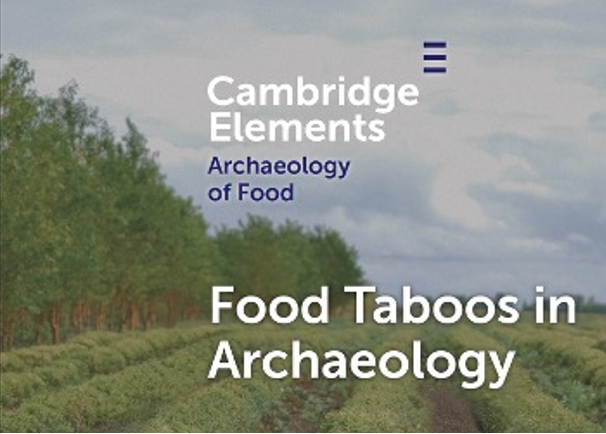
‘Food taboos in archaeology’ by Max Price explores the fascinating history of food taboos.
The volume is free to access and download until March 24th here!
Summary:
Anthropologists have struggled with the concept of the food taboo for over a century; and archaeologists struggle with detecting them in the material signatures of the past.  Yet by recognizing that ancient peoples must have followed taboos, some of which may have persisted for thousands of years, we gain insight into how cultural traditions shaped the ways in which people ate and interacted with their environments. This Element concerns food and the cultural structures that surround it. It provides an overview of the history and anthropological understandings of food taboos, and offers critical engagement with the current archaeological method and theory investigating these. Archaeological case studies, including the pig taboo in Judaism and ethnoarchaeological analysis of various mammalian taboos among the Nukak of Amazonia, shed light on the difficulties and prospects of studying food taboos in the material record.
Check for forthcoming and past volumes here
Previously published:
- Hunting and Eating symbols (Nerissa Russell)
- The Behavioural Ecology of Food (Elic M. Weitzel and Natalie D. Munro)
- How Urbanism Changes Foodways (Monica Smith)
- Food In Ancient China (Yitzchak Jaffe)
Elements in the Archaeology of Food showcase the vibrancy and intellectual diversity of twenty-first century archaeological research into food. Volumes reveal how food archaeology not only illuminates ancient political manoeuvres, social networks, risk management strategies, and luxurious pleasures, but also engages with modern heritage management, health, and environmental conservation strategies.