The Protohistoric Archaeology team is reviewing finds from the excavation led by Xavier Solé Palacín, a key intervention for deepening our understanding of the Iberian site. The research is supported by Valls City Council and the Department of Culture of the Government of Catalonia
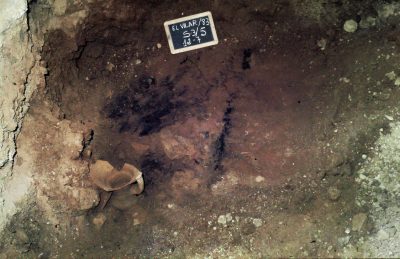
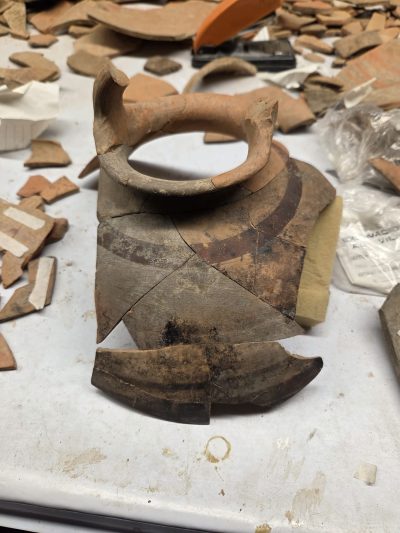
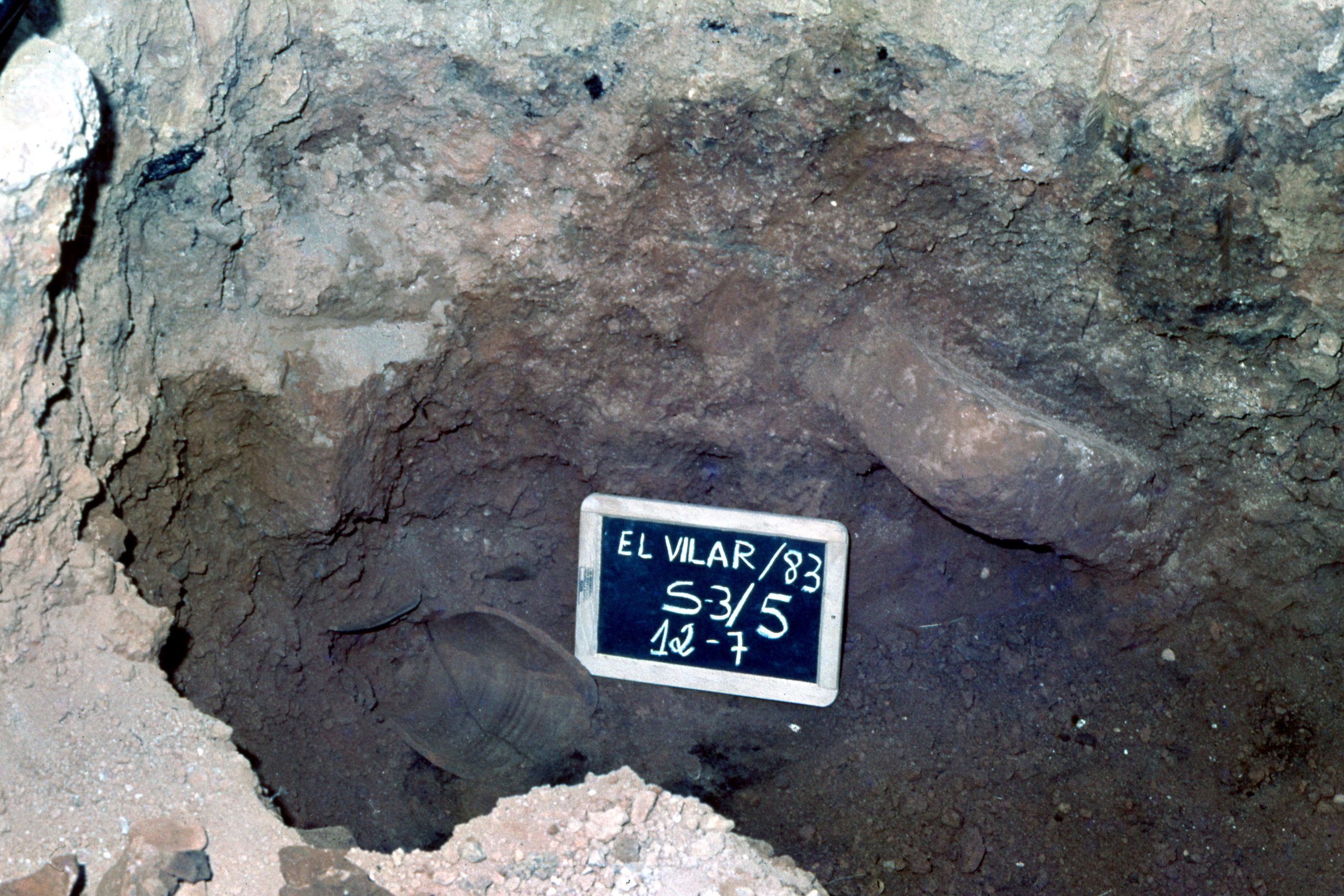
Since 2022, the Protohistoric Archaeology team at the Catalan Institute of Classical Archaeology (ICAC) has been carrying out a systematic review of the archaeological materials recovered during the excavations at El Vilar de Valls, led by Xavier Solé Palacín in 1983. The materials, currently held at the Institut d’Estudis Vallencs (IEV), come from a particularly significant excavation, as it was the first intervention at the site to employ modern archaeological methods after the Franco dictatorship.
The complexity of the excavation and the time elapsed since the intervention have made it necessary to recover and systematise the available information to facilitate the study and interpretation of the finds. Previous contributions by Esther Fabra, head of the IEV Archaeology Committee, and the documentation compiled by local archaeologist Enric Vilalta have been essential to this work.
The research is part of the four-year project El territori de Cessetània occidental al primer mil·lenni aC: del bronze final a la romanització. The work has been carried out mainly by Antoni Corrales, predoctoral researcher at the ICAC, and Dr Joan Canela, co-principal investigator of the project and researcher affiliated with the Institute. Other ICAC specialists have also contributed to the study of unfired earth materials, faunal remains and lithic artefacts.
Pits 1 and 3: evidence of occupation after the Battle of Cissa
The first phase of the research focused on materials recovered from pits 1 and 3. These underground structures, originally used for grain storage, were often repurposed as rubbish dumps once they were no longer needed. The discarded materials accumulated in them provide valuable evidence of ancient communities’ everyday lives, economic activities and trade networks.
The assemblages studied include pottery, fragments of unfired clay, faunal remains and metal objects, broadly dated to shortly after 200 BC. One particularly noteworthy find is a relatively well-preserved iron spearhead.
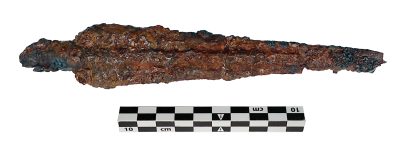
The review of the materials, especially those from pit 3, suggests that these features may have been filled with debris from the clearing of one or more houses destroyed after the famous Battle of Cissa (218 BC). This interpretation raises the possibility that an attempt was made to reoccupy the Iberian city following this catastrophic event. It remains unclear whether this represented a marginal occupation or an effort to restore the former urban centre. The results of the more recent archaeological excavations carried out at the site by the University of Barcelona, led by Dr Jaume Noguera, may help shed light on this question.
A possible wine cellar and new insights into the Iberian economy
The other area examined is known as TP3. It appears to comprise at least two partially preserved rooms within the Iberian settlement, provisionally dated to the late third century BC.
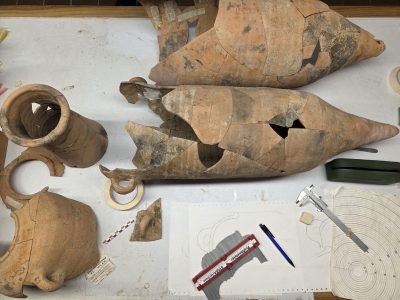
This area is particularly interesting because of the significant concentration of amphorae, most of them Iberian in origin. This suggests that the space may have functioned as a wine cellar or served a similar storage-related purpose. The identification of carbonised grape seeds (Vitis vinifera) further supports this hypothesis.
Charcoal remains were also recovered from this area. Their study will provide valuable information about agricultural practices and the natural environment surrounding El Vilar during the Iberian period.
New research directions: archaeometry and Iberian pottery
Having completed the study of these two areas, the team plans to continue reviewing the remaining materials from the 1983 excavation. The results obtained so far open up new research opportunities, particularly in the application of archaeometric techniques to the study of Iberian pottery.
Chemical analysis of ceramic materials can help identify their provenance and provide new evidence about production centres. This is a particularly promising line of research because, despite the large-scale production of wheel-thrown pottery during this period, the locations where it was manufactured remain poorly understood.
Continuing this work will deepen our understanding of El Vilar de Valls and the communities that inhabited it, while also helping to recover and highlight an archaeological assemblage from an excavation that was fundamental to the history of research at the site.
The research is supported and funded through the collaboration of the Department of Culture of the Government of Catalonia and Valls City Council.