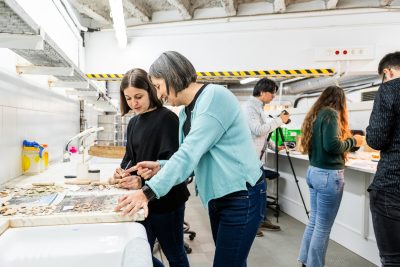
ICAC research has identified three chemical composition groups in the productions of this important pottery centre in Cessetania, paving the way for further research into its production organisation and the distribution of its ceramics.
The Protohistoric Archaeology Team at the Catalan Institute of Classical Archaeology (ICAC) has, for the first time, characterised the chemical and mineralogical composition of Iberian pottery productions from Fontscaldes (Valls). The study, involving ICAC researchers Dr Joan Canela, Dr M. Carme Belarte and Dr Judith Peix, establishes a first analytical reference for identifying the provenance of these ceramics and gaining further insight into this important production centre in Cessetania.
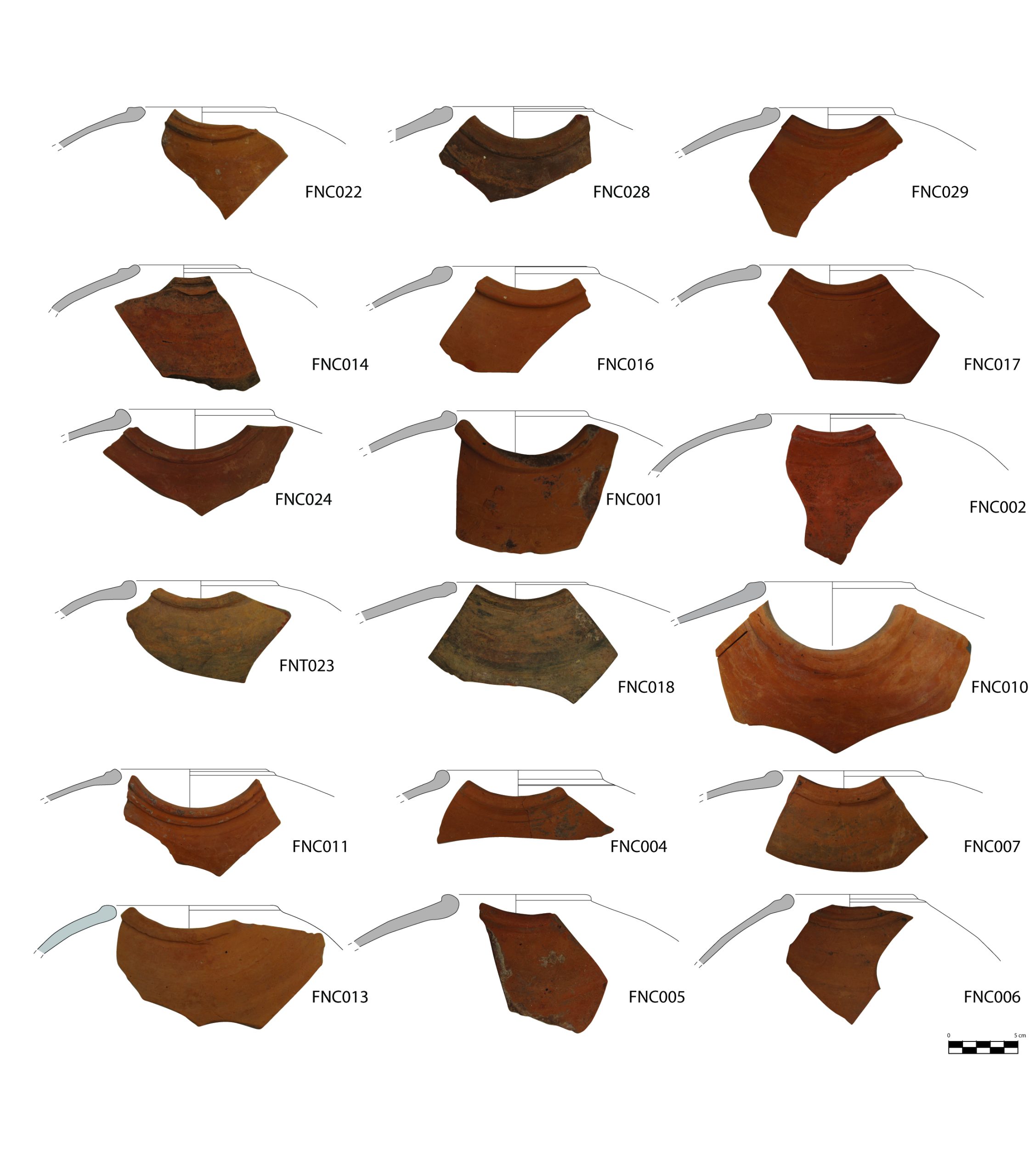
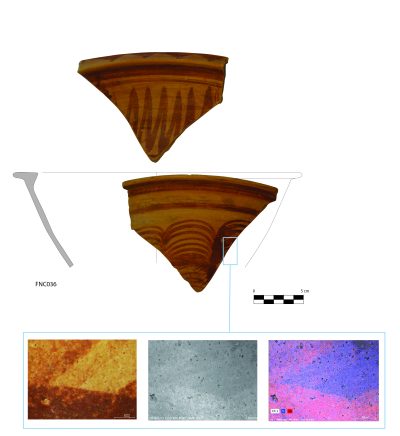
The research combined several archaeometric techniques, including X-ray fluorescence (XRF), X-ray diffraction (XRD) and scanning electron microscopy (SEM-EDS). The analyses identified three distinct chemical composition groups, represented in both amphorae and fine tableware. This overlap suggests that, despite the functional differences between the two types of vessels, common raw materials and clay preparation methods were used. The identification of these three groups also raises new questions about the organisation of production and its possible chronological development.
Furthermore, the mineralogical analyses made it possible to estimate firing temperatures ranging from 850 to 1,000 °C and obtain information about manufacturing conditions. Regarding the decoration of fine tableware, particularly kalathoi and red-painted plates, the analyses identified iron-rich pigments, consistent with the use of hematite and small amounts of manganese. These analyses were carried out during a research stay by Judith Peix Visiedo at the HERCULES Laboratory of the University of Évora (Portugal).
A reference point for studying ceramic production and distribution
The archaeometric characterisation of pottery from Fontscaldes represents an important step towards understanding the distribution of its products. This new reference dataset will make it possible to compare their composition with that of ceramics documented at other archaeological sites and assess their possible provenance. In addition, combining the analytical results with experimental work using local clays helps reconstruct the processes involved in raw material selection and pottery manufacture.
Fontscaldes was an important Iberian pottery production centre, active approximately between the 3rd and 2nd centuries BC. Its products were widely distributed across the Iberian Peninsula and the western Mediterranean. This research opens up new avenues for gaining a better understanding of its production activities, the technical choices made by its craftspeople and the centre’s role in ceramic distribution networks.
The study is part of the ICAC’s four-year research project The territory of western Cessetania in the first millennium BC: from the Late Bronze Age to Romanisation, co-directed by M. Carme Belarte Franco (ICREA-ICAC) and Joan Canela Gràcia (ICAC).
The research has received support and funding from the Department of Culture of the Government of Catalonia and Valls City Council, as well as support from the Archaeology Committee of the Institut d’Estudis Vallencs.