The programme included a workshop on epigraphic heritage and a talk on the potential of plant remains for understanding past societies
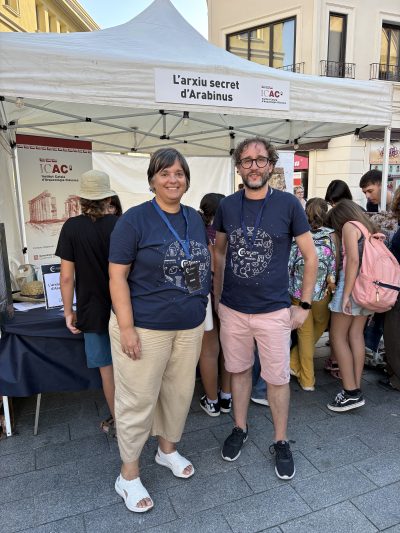
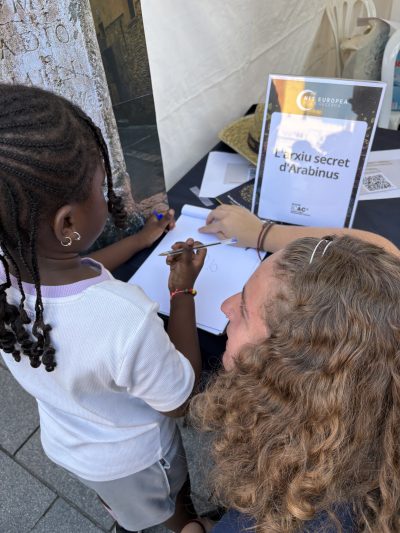
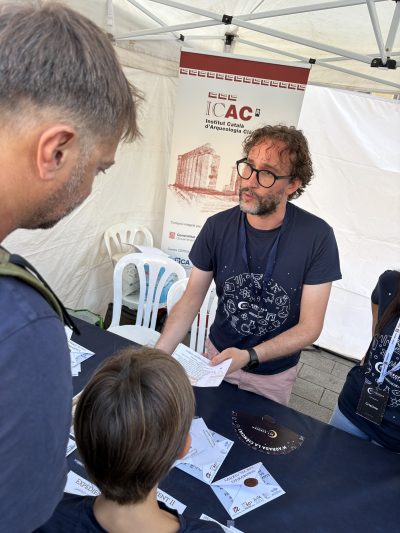
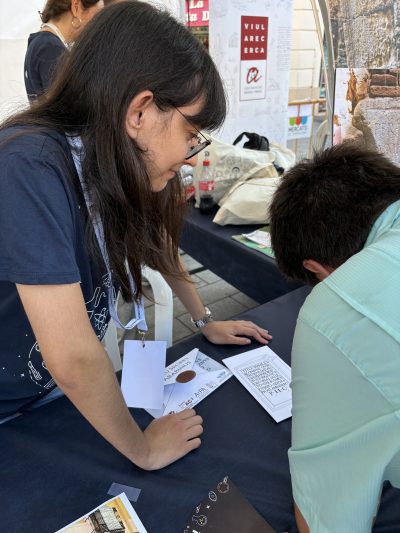
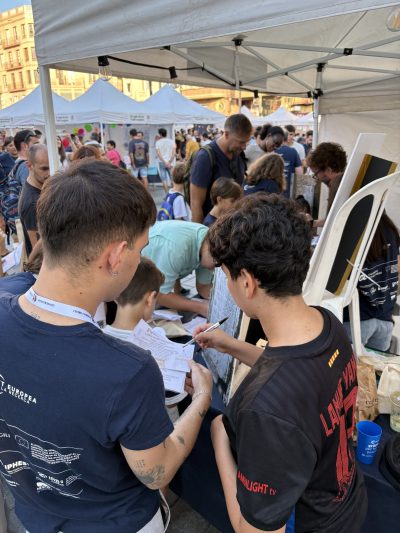
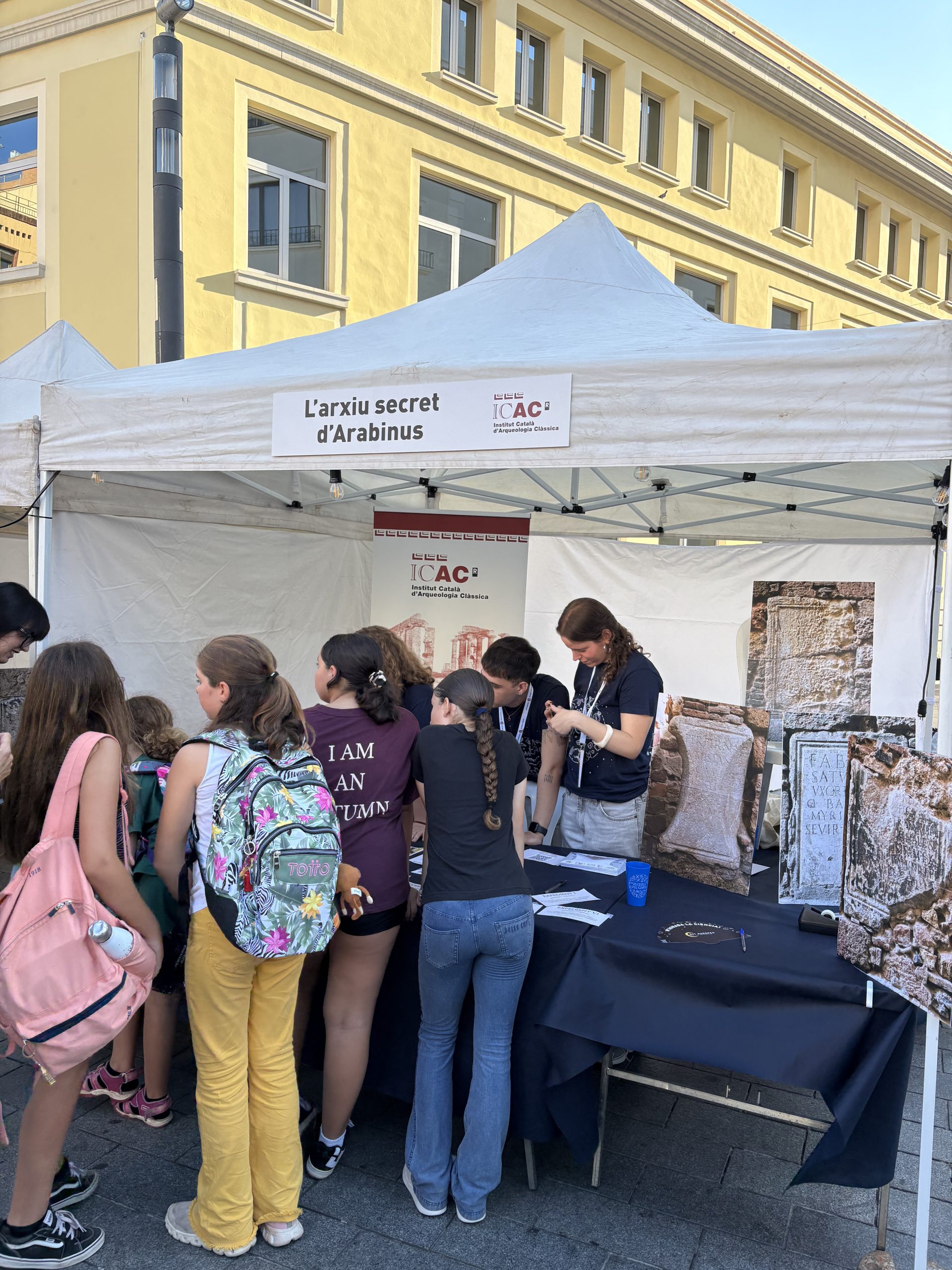
The Catalan Institute of Classical Archaeology (ICAC) took part in the 2026 European Researchers’ Night with the workshop “Arabinus’ Secret Archive”, a new educational and outreach resource designed to bring Tarragona’s epigraphic heritage closer to young people and adults through gamification.
“Arabinus’ Secret Archive” is the outcome of the epigraphy placements carried out last academic year by six students from Rovira i Virgili University (URV) as part of the “Romans de Pedra i Lletra” project, the public outreach branch of the TVTELAE research project (“Tutelaring, Valuing and Transferring the Epigraphic Archive: Challenges for the Study, Conservation and Dissemination of the Roman Inscriptions of Tarraco as Cultural Heritage”). The project is led by Diana Gorostidi (URV-ICAC) and Hugo Feliu (ICAC), both members of the TVTELAE team. During their placements, the students worked on promoting Tarragona’s epigraphic heritage and were invited to develop a proposal that would help bring it closer to the wider public.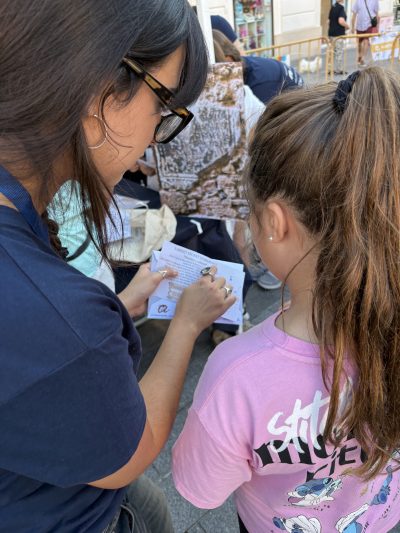
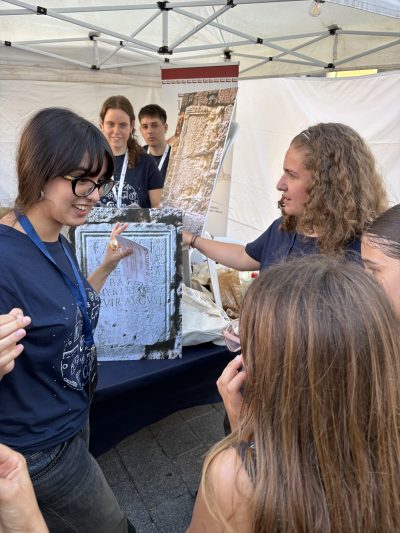
The result is an educational workshop with a playful approach, inspired by escape room mechanics and storytelling. Through a narrative thread and a series of challenges, the game invites participants to discover and interpret Roman inscriptions embedded in the streets of Tarragona’s upper town. No prior knowledge of epigraphy or history is required to take part.
The workshop was conceived as an interactive complement to the various archaeological heritage outreach resources offered by Tarragona’s heritage and cultural institutions. Its aim is to integrate Roman epigraphy into heritage trails and educational routes focused on Tarragona’s Roman past, create a new way for the public to engage with ancient inscriptions, and strengthen the connection between archaeological research and society.
The workshop was presented on 25 September, from 4:30 p.m. to 9:00 p.m., in Corsini Square, Tarragona, as part of the European Researchers’ Night Science Workshops Fair.
Archaeobotanical research takes centre stage in a talk in Reus
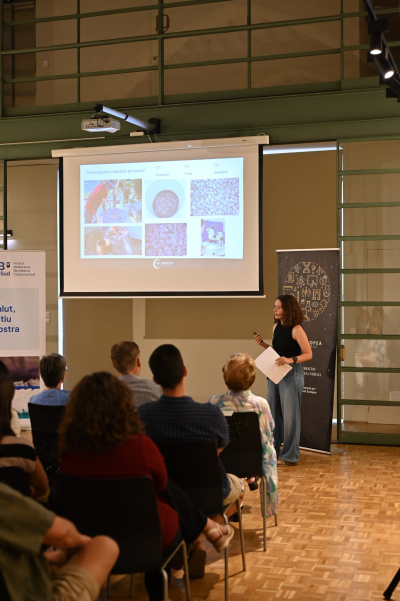
ICAC’s participation in the European Researchers’ Night was rounded off with the talk “Seeds that Tell Landscapes”, delivered by ICAC researcher Marina Daniel on 21 September at 6 p.m. at the Castell del Cambrer in Reus.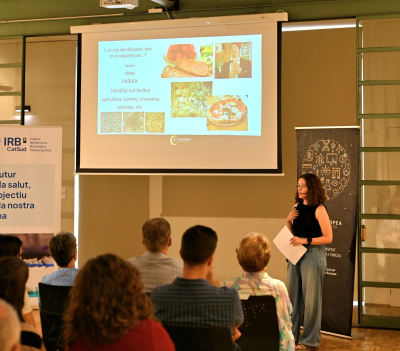
During the session, attendees learned how the study of material remains, specifically seeds and fruit remains, can provide valuable information about the interactions between past human societies and the cultural and natural environments that surrounded them.
These types of evidence make it possible to investigate aspects such as trade, economy and landscape transformation, while also shedding light on more complex issues such as culture and identity. Plant remains can thus become witnesses to both everyday life and special events in the past.
The talk was held in collaboration with researchers from different disciplines and research institutes across the region, highlighting the interdisciplinary nature of archaeological research.