Laura Galán’s study expands the number of documented pavements from 90 to 171 and provides new data on the chronology, techniques, and marble production and distribution networks in Roman times
Laura Galán Palomares, a member of the ArPA-LIRA team and an affiliated researcher at the Catalan Institute of Classical Archaeology (ICAC), has published a new article in the journal Archivo Español de Arqueología presenting the most comprehensive review to date of sectilia pavimenta and other marble pavements in the Roman province of Hispania Citerior.
The study, entitled “Sectilia pavimenta y otros pavimentos marmóreos en la provincia Hispania Citerior: cronología, evolución técnica y distribución geográfica”, stems from the doctoral thesis defended by the author in 2024, which received the URV Extraordinary Doctorate Award and was developed at ICAC under the supervision of researchers Begoña Soler Huertas and Anna Gutiérrez Garcia-M.
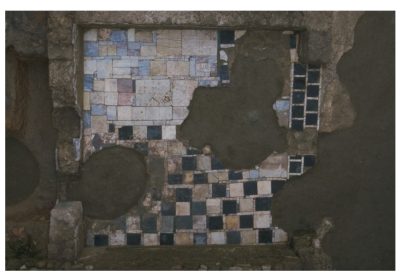
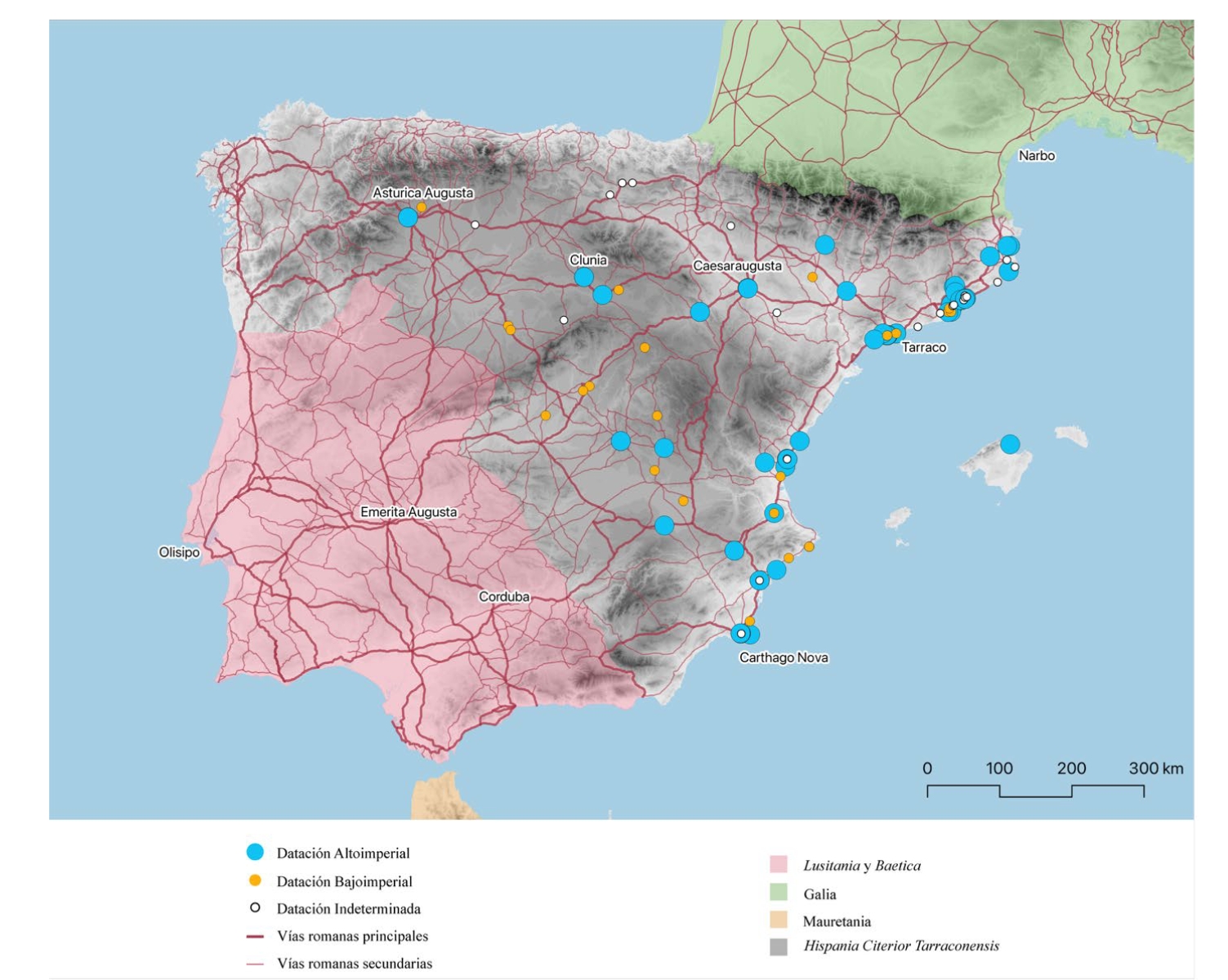
The study analyses the presence and development of decorative marble surfaces between the 1st and 4th centuries AD, based on an extensive archaeological corpus of 171 pavement records distributed across the territory corresponding to the former Roman province of Hispania Citerior (later Tarraconensis).
The research significantly updates and expands the reference study published by E. Pérez Olmedo in 1996. In addition to substantially increasing the number of known pavements, from 90 to 171, the study examines the chronological, technical, material, and territorial aspects of marble surfaces and offers a new approach to the dynamics of marble production, distribution, and consumption in the western provinces of the Roman Empire.
One of the main conclusions is the identification of an early adoption of Italian decorative models, followed by a gradual process of local and regional production. The research documents the coexistence of imported pavements with others produced in provincial workshops, as well as the gradual incorporation of stone materials of Hispanic origin, demonstrating the consolidation of a local production and distribution network.
The article also highlights the role of cities such as Tarraco, Carthago Nova, Emporiae, and Caesar Augusta as centres for the reception and redistribution of marble materials, and shows how marble became a key element of social representation and prestige in both public and private spaces.
Another important aspect of the study is its analysis of marble reuse practices. The research demonstrates that the reuse of materials from earlier pavements was common throughout the Imperial period, reflecting both the economic and symbolic value of this material within Roman material culture.
According to the author, the study confirms that the marble pavements of Hispania Citerior cannot be understood simply as imitations of metropolitan models, but rather as an expression of a distinctive material culture capable of adapting and reinterpreting Roman decorative trends according to the economic, social, and territorial realities of the western provinces.
The article was published in volume 99 (2026) of the journal Archivo Español de Arqueología, edited by the Spanish National Research Council (CSIC), and is available in open access.
Publication reference
Galán Palomares, Laura (2026). Sectilia pavimenta y otros pavimentos marmóreos en la provincia Hispania Citerior: cronología, evolución técnica y distribución geográfica. Archivo Español de Arqueología, 99: 783. DOI: 10.3989/aespa.099.026.783