The GIAP archaeobotany team spent two weeks at the Turkish archaeological site analysing plant remains from a range of archaeological contexts
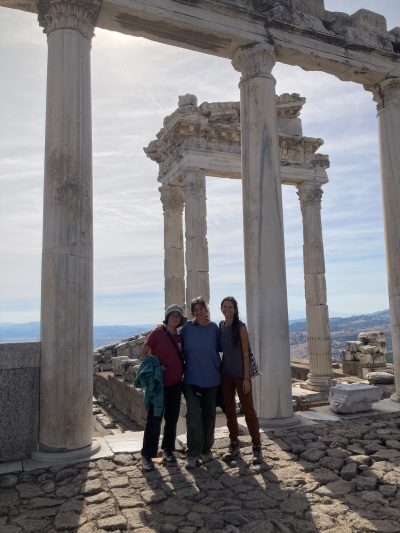
At the end of September and during the first weeks of October, ICAC researchers Dr. Alexandra Livarda, Dr. Jessica Feito and Marina Daniel, members of the archaeobotany team at the Landscape Archaeology Research Group (GIAP), visited the archaeological site of Pergamon, located in the modern town of Bergama, Turkey. Their visit marked the beginning of a new collaboration between the ICAC team, the German Archaeological Institute (DAI) in Istanbul, directed by Professor Felix Pirson, and the archaeological project at Pergamon.
A key site for understanding the past of the eastern Mediterranean
Pergamon preserves the remains of a Hellenistic city founded in the 3rd century BC, which became the capital of the Attalid kingdom and one of the region’s main cultural and political centres. The city continued to flourish during the Roman period, when existing structures were preserved and expanded, and new buildings were added.
The acropolis rises above a rich and diverse archaeological landscape, featuring funerary tumuli and remains from the Roman, Byzantine and Ottoman periods, both in its immediate surroundings and in the lower part of the present-day town of Bergama.
This setting offers an opportunity to explore the relationships between human societies and the plant world over time through the study of archaeobotanical remains preserved at the site.
Plant remains analysis and laboratory work
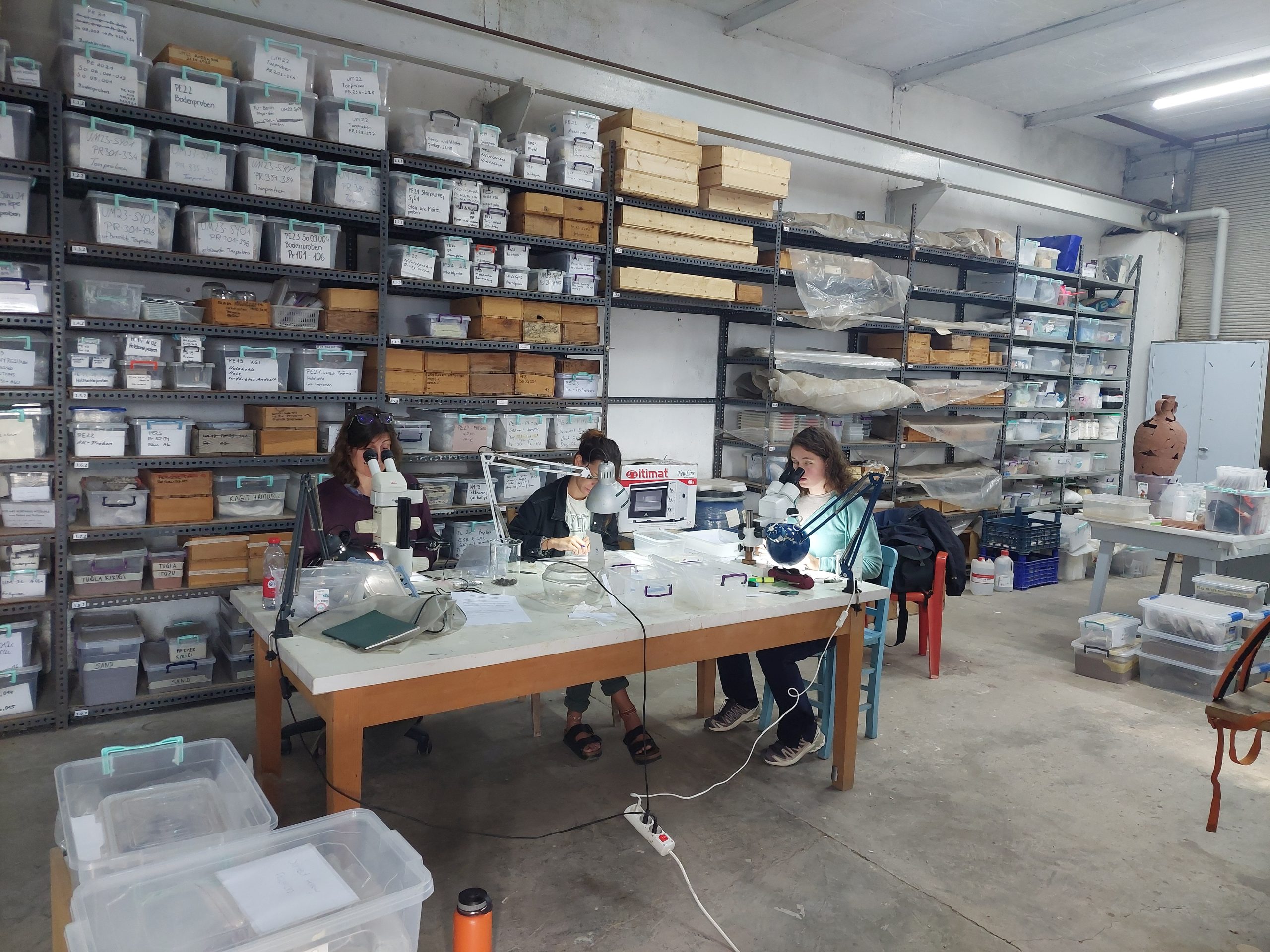
During their stay, the ICAC archaeobotany team began flotation work and laboratory analyses of ancient plant remains recovered from different excavated contexts at Pergamon. These activities make it possible to recover and study plant material that can shed light on the practices and interactions between human communities and their environment.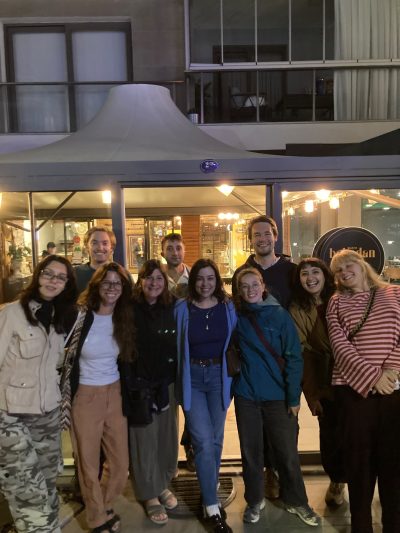
The team was joined by Islam Turan, who participated in the archaeobotanical work and made a significant contribution to sample processing.
The Pergamon team, led by Felix Pirson, Güler Ateş and Ulrich Mania, provided valuable support and shared important information about the site and the project. The collaboration also benefited from the contributions of Wolf-Rüdiger Teegen, the site’s anthropologist, Yula Deniz Perksoy Kır, Jacob Krasel, Fabian Becker, Seçil Tezer Altay, Eylül Yildiz, Gizem Efe Turgut and the rest of the team, who provided information, equipment, stimulating discussions and excellent company throughout the two-week stay.
This first visit lays the foundations for a collaboration that will continue next year. The GIAP team looks forward to returning to Pergamon to further investigate the complex relationships between human communities and plants at this remarkable archaeological site.