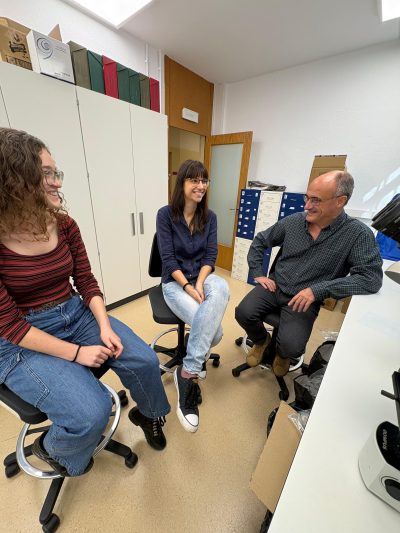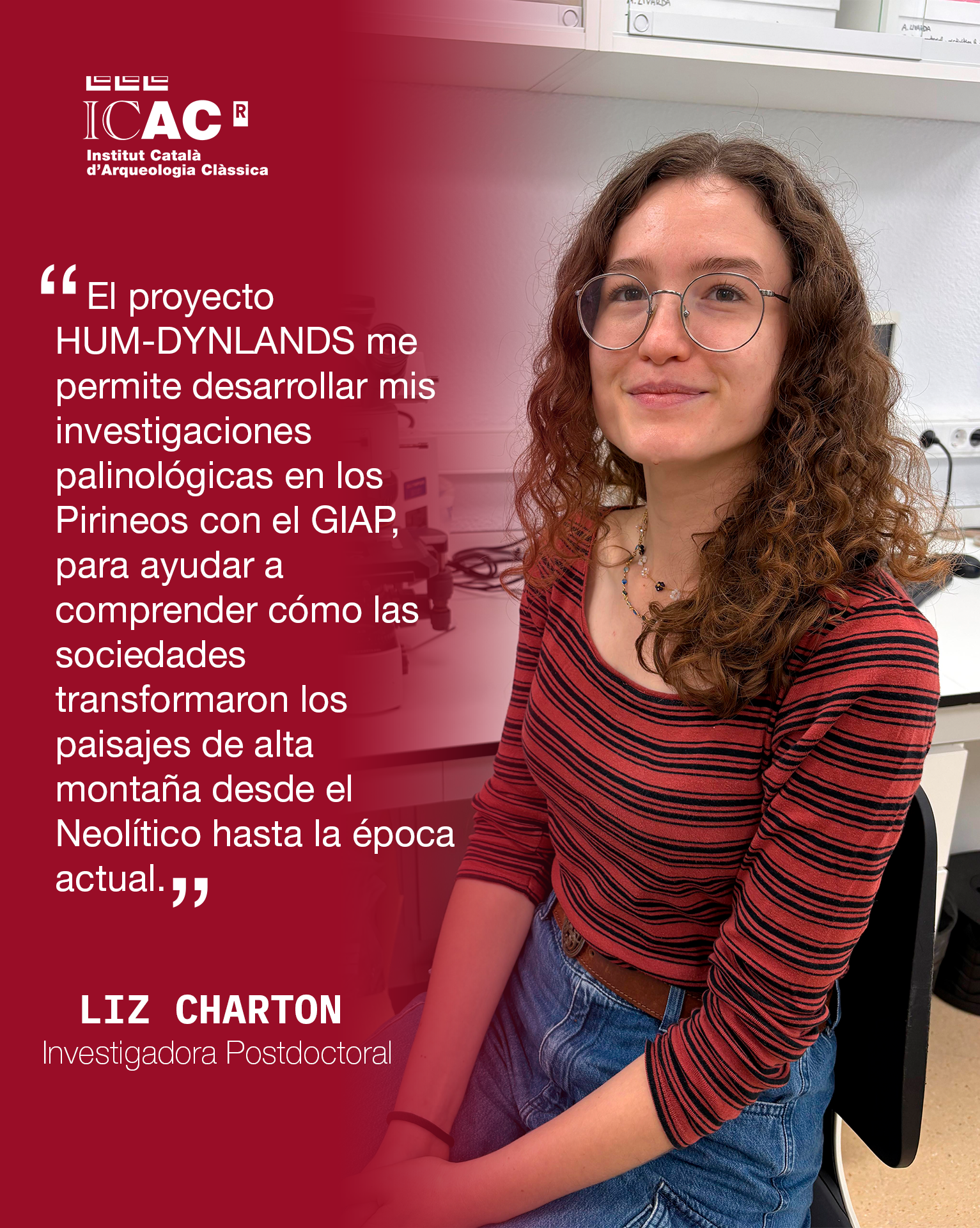
The Catalan Institute of Classical Archaeology (ICAC) welcomes Liz Charton, who joined the institute on 1 September as a postdoctoral researcher within the framework of the HUM-DYNLANDS project – Mediterranean Cultural Landscapes: Integrated and Comparative Analysis of Long-Term Settlement and Occupation Dynamics in High-Mountain Environments and Coastal Plains (PID2024-159956NB-I00), under the coordination of Dr Josep Maria Palet Martínez and Dr Valentina Pescini. Charton joins the Landscape Archaeology Research Group (GIAP).
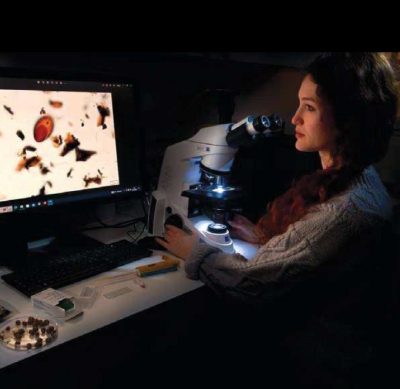
Her research focuses on reconstructing the history of vegetation and studying the formation of cultural landscapes in the high mountains of the eastern Pyrenees, particularly in Cerdanya. Through high-resolution palynological analysis of sediments from lakes and peat bogs, she investigates landscape transformations and the interactions between human societies and the environment from the Neolithic period to the present day.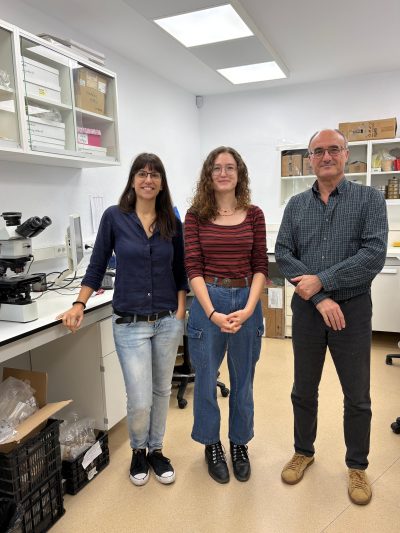
Specialising in palynology and palaeoenvironmental reconstructions, Charton has developed her research career around the study of Mediterranean landscapes and the relationships between human societies and their environment. She holds a bachelor’s degree in History and Geology from Sorbonne Université (2017–2020) and completed an international Master’s degree in Quaternary and Prehistory at Universitat Rovira i Virgili and the University of Ferrara, Italy (2020–2022), with the support of a European Union Erasmus Mundus scholarship. During this period, she specialised in palynology at IPHES, where she studied pollen and palynomorphs from the Neolithic site of La Draga (Banyoles).
Between 2022 and 2026, she carried out her doctoral research through a joint supervision arrangement between the National Museum of Natural History in Paris and the University of Florence, under the supervision of Nathalie Combourieu-Nebout and Adele Bertini. Her research focused on the palynological study of a long marine sediment sequence from the Alboran Sea, covering the Middle and Late Pleistocene. Through multiproxy palaeoenvironmental reconstructions and pollen-based palaeoclimatic quantifications, her research has helped establish an environmental context for the dynamics of Middle and early Upper Palaeolithic populations in the southwestern Mediterranean.
In this new stage at ICAC, Charton will apply her expertise in palynology to the study of transformations in Pyrenean landscapes, aiming to understand how human societies have shaped high-mountain environments over time.
ICAC warmly welcomes Liz Charton and wishes her every success in this new stage of her research career.