Brief CV
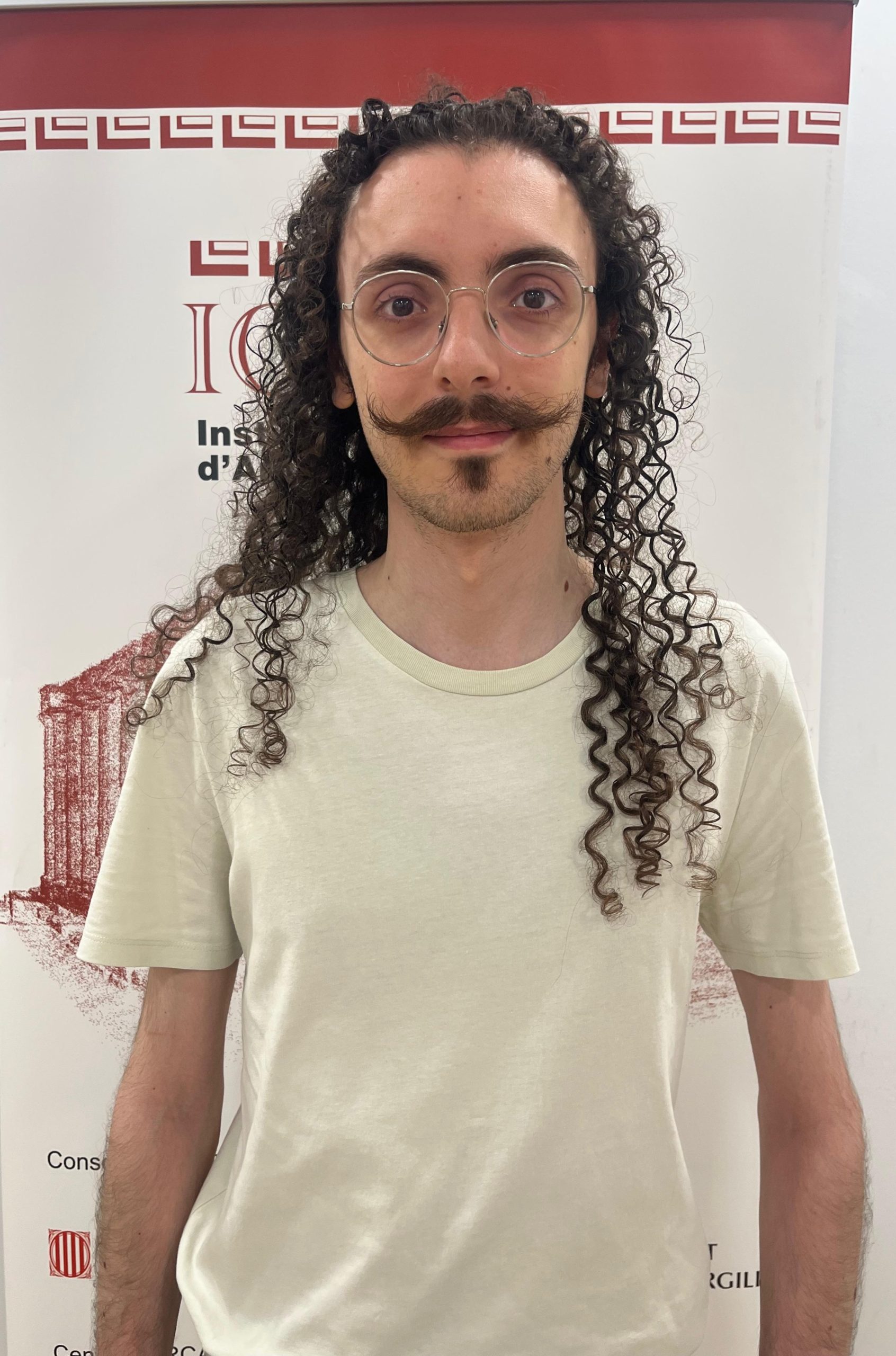
Bacherlor in Chemistry from the University of Barcelona in 2023. His interest in the analysis of archaeological samples began with his Bachelor’s thesis, entitled “Identification of wine in Roman pottery,” supervised by Dr. Sonia Sentellas and Dr. José Francisco García. The project aimed to analytically determine organic residues of wine in fragments of Roman Catalan dolia. To achieve this, the validity of various biomarkers was studied, an extraction method was developed, and an analytical methodology was implemented using high-performance liquid chromatography in tandem with a triple quadrupole mass spectrometer (HPLC-MS/MS) in SIM mode for wine biomarkers.
He obtained a Master’s degree in Analytical Chemistry from the University of Barcelona in 2024. During his Master’s studies, he specialized in chromatography and mass spectrometry. He continued his undergraduate research with his Master’s thesis, “Determination of tartaric and syringic acids in ancient pottery as wine markers,” which aimed to broaden the scope of his research by using more biomarkers and a larger number of samples.
Currently, he is a predoctoral researcher at the ICAC and a member of the Landscape Archaeology Research Group (GIAP), with a predoctoral research grant awarded by the Ministry of Science, Innovation and Universities. His research is part of the R&D project “We are what we eat: a study of dietary habits in Roman Hispania through biogeochemistry (BIOEAT)” (PID2024-157503NB-I00), led by researcher Lídia Colominas.
His doctoral thesis project, entitled “Archaeometry of food in Roman Catalonia: analysis of organic residues in kitchen ceramics” and under the direction of Dr. Lídia Colominas and Dr. Nicolas Andre Louis Rozès (URV-ENOLAP), focuses on the analysis of organic residues, especially lipid remains, remaining after the use and burial of kitchen ceramics during the Roman period (1st century BC – 3rd century AD) in Catalonia by gas chromatography and mass spectrometry.