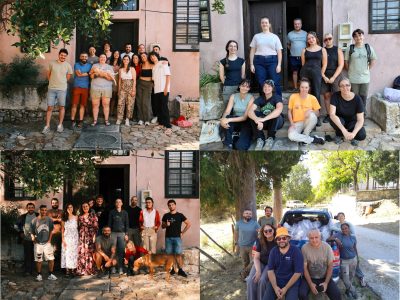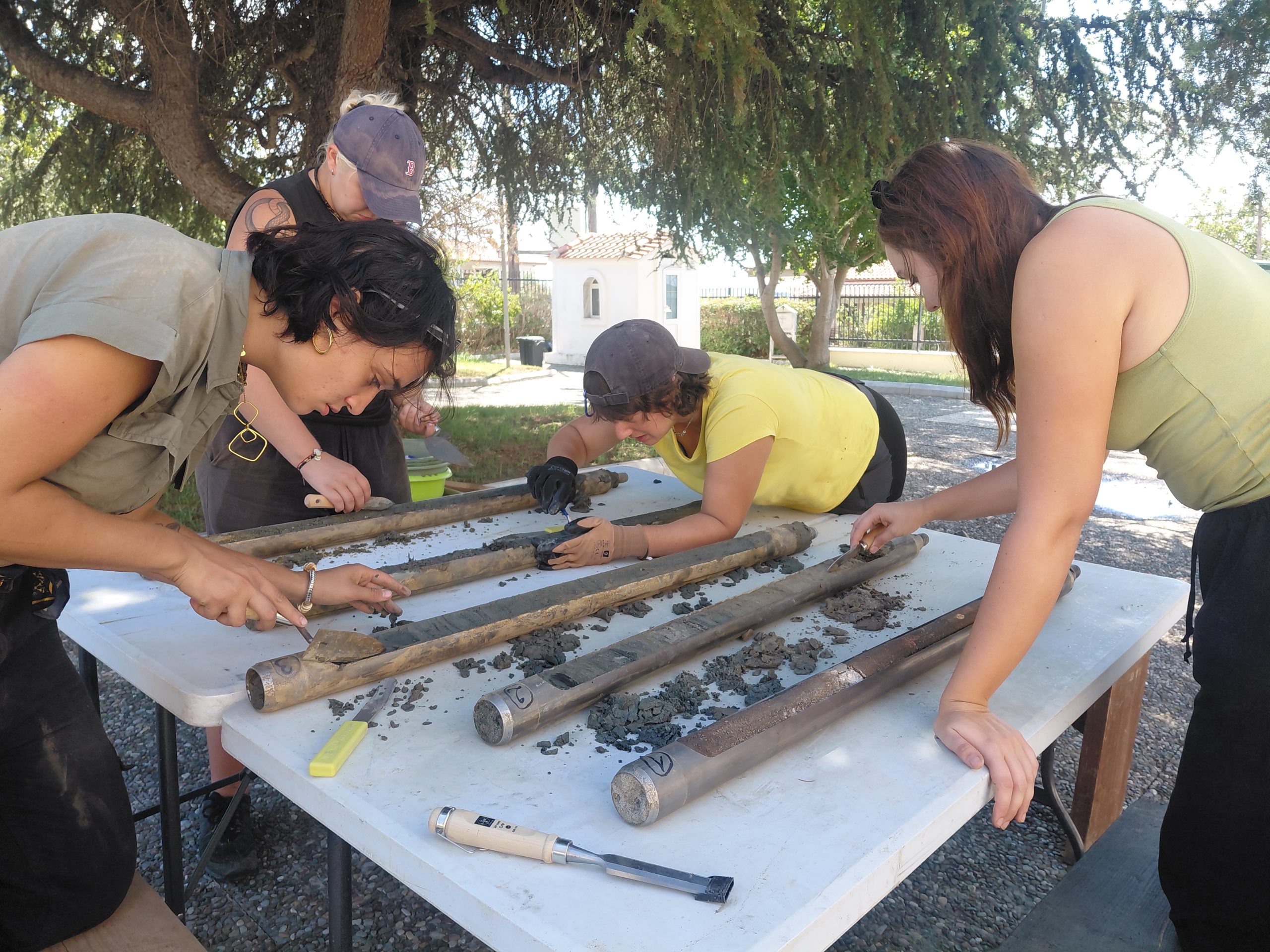
An international, multidisciplinary team has carried out six weeks of fieldwork to investigate settlement patterns, landscape change and interactions between human societies and their environment over time.
In July and September 2026, an international, multidisciplinary team led by researchers from the Landscape Archaeology Research Group (GIAP) at the Catalan Institute of Classical Archaeology (ICAC), the Ephorate of Antiquities of Xanthi, the Universities of Athens and Crete, and ISEM-Montpellier conducted a new archaeological and palaeoenvironmental research campaign around ancient Abdera, in the province of Xanthi, in the region of Eastern Macedonia and Thrace, northeastern Greece.
The work was carried out within the framework of the MEDLANDS (funded by Ministerio de Ciencia e Innovación and European Union) and DIPAX projects, with the aim of collecting data to reconstruct settlement dynamics, landscape transformations and interactions between human societies and the environment from a long-term historical perspective.
Six weeks of multidisciplinary research
The 2026 campaign lasted six weeks and combined different lines of archaeological, geoarchaeological and palaeoenvironmental research, carried out simultaneously by several specialised teams.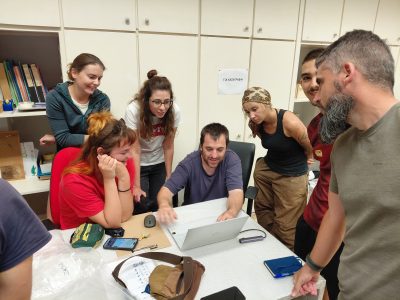
One of the main activities was a systematic archaeological survey of the rural territory around Abdera, aimed at documenting human occupation from Late Prehistory to the beginning of the Middle Ages. The work was directed by Dr Arnau Garcia-Molsosa and Dr Jesús Martínez, researchers at GIAP-ICAC, and Professor Eurydice Kefalidou of the National and Kapodistrian University of Athens.
In parallel, the team carried out the archaeological characterisation of two Protohistorical sites located on hilltops in the Nestos valley, in the Rhodope Mountains. This work was directed by Dr Arnau Garcia-Molsosa and Dr Jesús Martínez-Fernández, both from GIAP-ICAC. A prehistoric settlement on a hill overlooking the coastal plain was also investigated under the direction of Professor Merkouris Georgiadis of the University of Crete.
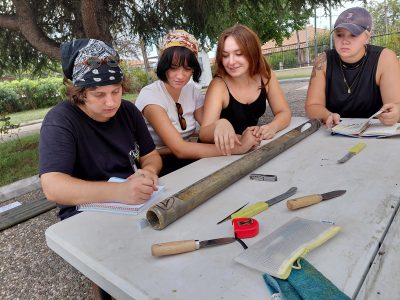
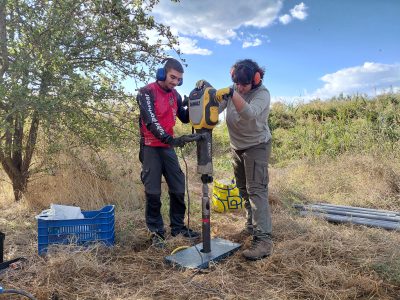 Geoarchaeological research played a prominent role in this campaign. The team led by Dr Alfredo Mayoral, from GIAP-ICAC, conducted sediment-recovery drillings in coastal areas around ancient Hellenistic and Roman Abdera. These investigations aim to reconstruct the coastline’s palaeogeography, identify potential ancient harbour areas and obtain sedimentary sequences suitable for future multiproxy palaeoenvironmental analyses.
GIAP-ICAC predoctoral researcher Isabel Mattuzzi led extensive archaeological surveys and the analysis of lithostratigraphical profiles to obtain geoarchaeological and palaeoenvironmental data and complement the area’s palaeogeographical reconstructions.
This approach was complemented by vegetation studies conducted by GIAP-ICAC predoctoral researcher Marta Tosolini and Dr Ana Ejarque from ISEM-Montpellier. The researchers carried out phytosociological studies and sampled modern vegetation to build a reference dataset that will help improve the interpretation of pollen data and support palaeoecological and palaeoenvironmental reconstructions.
An international training experience
Over the six weeks of fieldwork, 28 researchers from eight countries took part in the campaign, including undergraduate and master’s students and PhD candidates.
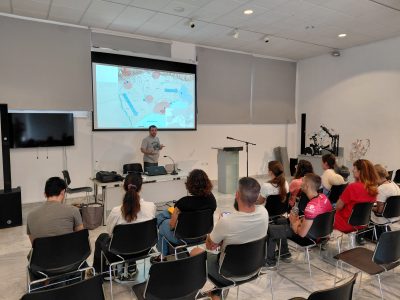
The work also provided participants with practical training in field research methods applied to Landscape Archaeology, within an international scientific collaboration.
This multidisciplinary research combines archaeology, geoarchaeology and palaeoenvironmental studies to deepen our understanding of landscape evolution and the interactions between human societies and their environment over time.