Se presentan tres monedas de cobre de época tardoantigua (ss. VI-VII d.C.) similares a los tipos F.49 y F.51 de Crusafont y 12-13 de Pliego. Todos ellos han sido recuperados en diferentes zonas del yacimiento tardoantiguo de València la Vella (Riba-roja de Túria, València), lo que indica un gran dinamismo económico, y una acentuada circulación monetaria en el mismo. El estudio aquí presentado resulta una novedad al poder tratarse de un nuevo tipo de cobre visigodo con motivos cruciformes en ambas caras o una nueva variante de una serie escasamente documentada hasta la fecha.
Search Results for: valencia+la+vella
Ninth Excavation Campaign at València ‘la Vella’ Uncovers New Insights into Late Roman Settlement
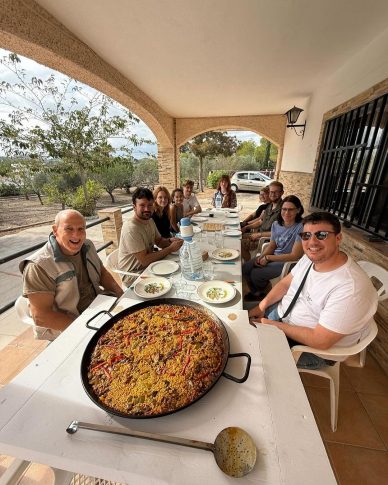
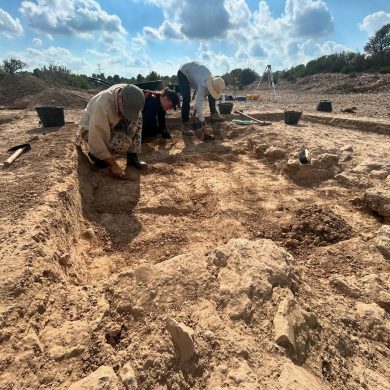
The ninth excavation campaign at Valencia “la Vella” has successfully concluded after two weeks of intense work.
On this occasion, a team from the Friedrich-Alexander-Universität Erlangen-Nürnberg, led by Dr Jenny Abura, collaborated closely with the Late Antiquity team at ICAC to deepen our understanding of the site.
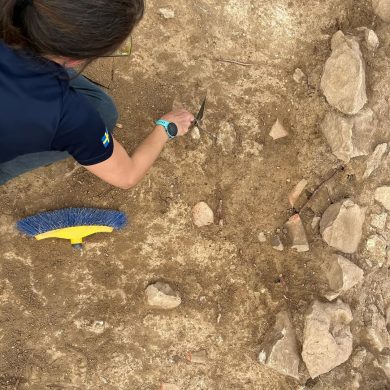
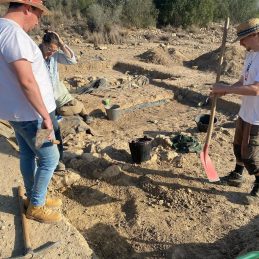
This campaign focused on studying sector 6200, where the structures of a Late Antique building were better defined. It identified two construction phases and a compacted earth floor, offering valuable insights into the configuration of one of the buildings.
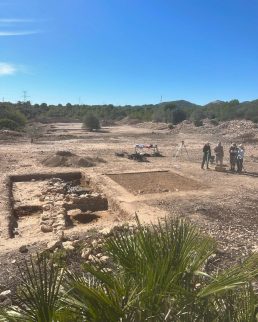
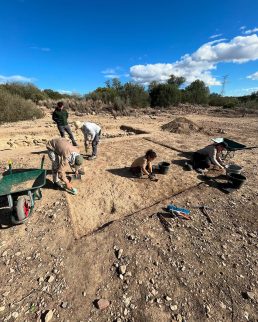
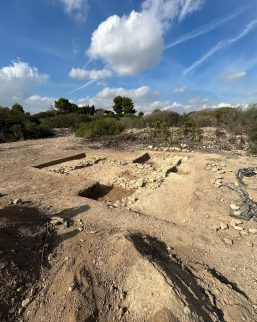
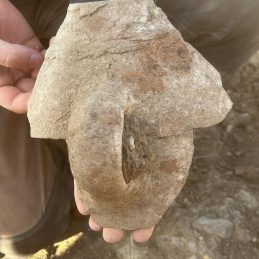
Significant discoveries included a Palestinian amphora of the LRA 4 type, as well as ceramic fragments and coins, shedding new light on the use and occupation of this area in Late Roman times. Ground-penetrating radar studies were also conducted in other areas of the site to improve understanding of the settlement’s urban layout.
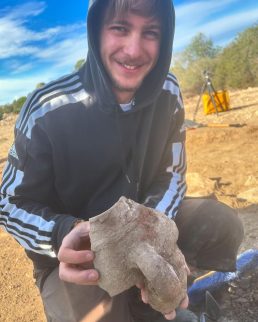
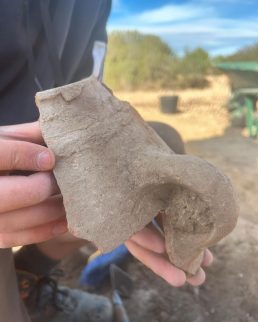
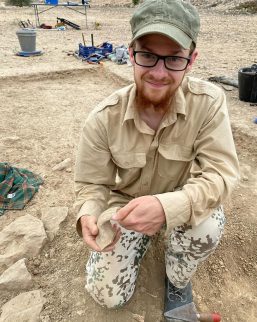
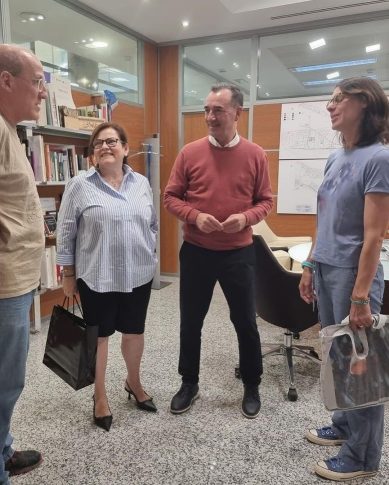
One of the campaign’s highlights was the institutional visit of the mayor of Riba-roja de Túria, Robert Raga, and the councillor for Tourism and Heritage, Esther Gómez, who welcomed the German team and expressed their gratitude to ICAC for its collaboration. During this visit, Dr. Josep Maria Macias (ICAC), project leader, presented the progress and future goals of this long-term research.
The team wishes to express its gratitude to the professionals and students who made this campaign possible, as well as to the Riba-roja de Túria City Council for its continued support in preserving and promoting this valuable archaeological heritage.

About the Catalan Institute of Classical Archaeology (ICAC)
The Catalan Institute of Classical Archaeology (ICAC-CERCA) is a CERCA center established as a consortium in 2003 by the Government of Catalonia and the Rovira i Virgili University. It is a Catalan institution with an international scope, at the forefront of research and conservation of archaeological heritage. Its headquarters are in Tarragona, a city recognized as a UNESCO World Heritage Site in 2000. Its researchers work to understand the past, through the study of archaeological remains and promote the preservation of the historical legacy. We are CERCA!
For more information, visit www.icac.cat.
Didàctica, gestió i divulgació del jaciment tardoantic de València la Vella (Riba-roja de Túria)
Presentació de la vessant més divulgativa i orientada cap al públic general del projecte d’excavacions de València la Vella. Dins d’aquestes intervencions, tots els anys hi ha un esforç d’apropar a la població de Riba-roja de Túria aspectes sobre el món tardoantic, com el cicle de conferències obertes al públic i la jornada de portes obertes. A més, hi ha una intensa activitat mitjançant les xarxes socials, principalment l’Instagram.
Valencia “la Vella” hosts an archaeology course from Newcastle University
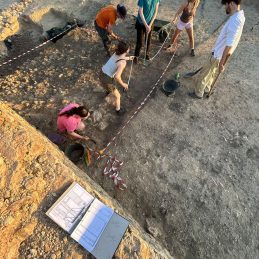
Excavations at the Visigothic site of Valencia “la Vella” hosted an archaeology course from Newcastle University, within the framework of the collaboration agreement between ICAC-CERCA and the Riba-roja de Túria City Council.
In the last weeks of July, this archaeology course included the participation of ten students, under the supervision of Chloë Duckworth, professor at Newcastle University and an expert in glass kilns.
They were accompanied by Albert Ribera, one of the site directors and a researcher affiliated with ICAC-CERCA, and David Govantes-Edwards, a specialist from the University of Córdoba, as well as the rest of the team of archaeologists from ICAC-CERCA, who were excavating the site under the coordination of Òscar Caldés (MIRMED).
The students worked in two different areas of the site, intending to excavate the glass kilns discovered recently at the late antique site of Valencia “la Vella”. The work began with the kiln in sector 1000, discovered during the 2018 campaign, and the kiln in sector 6200, discovered during the 2020 campaign.
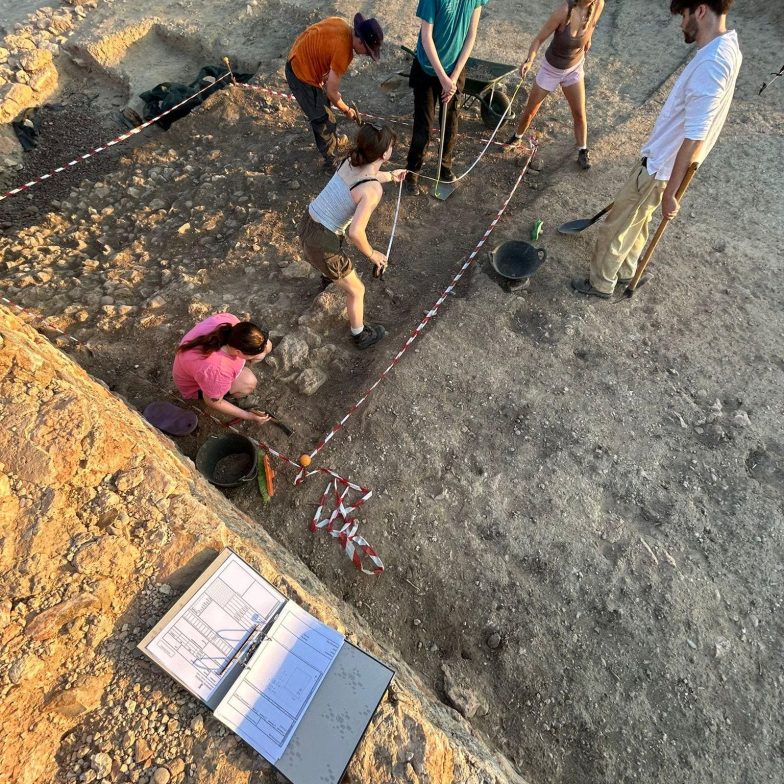
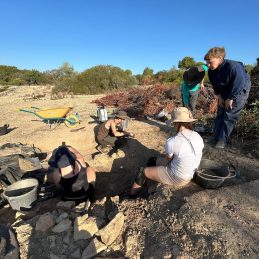
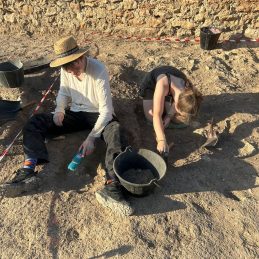
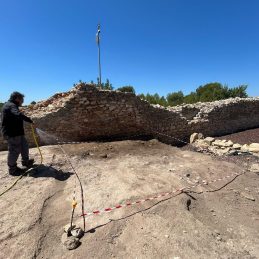
During the excavation, levels with adobe, ceramics, and animal bones showing signs of having been exposed to the fire were found, which increases the previously known significance of the potential combustion structure, which will be of great interest in the future.
All the excavated archaeological materials have been studied and documented, and have been transferred to the archaeological storage of the Visigothic Museum of Pla de Nadal (MuPla), located in the Castle of Riba-roja.
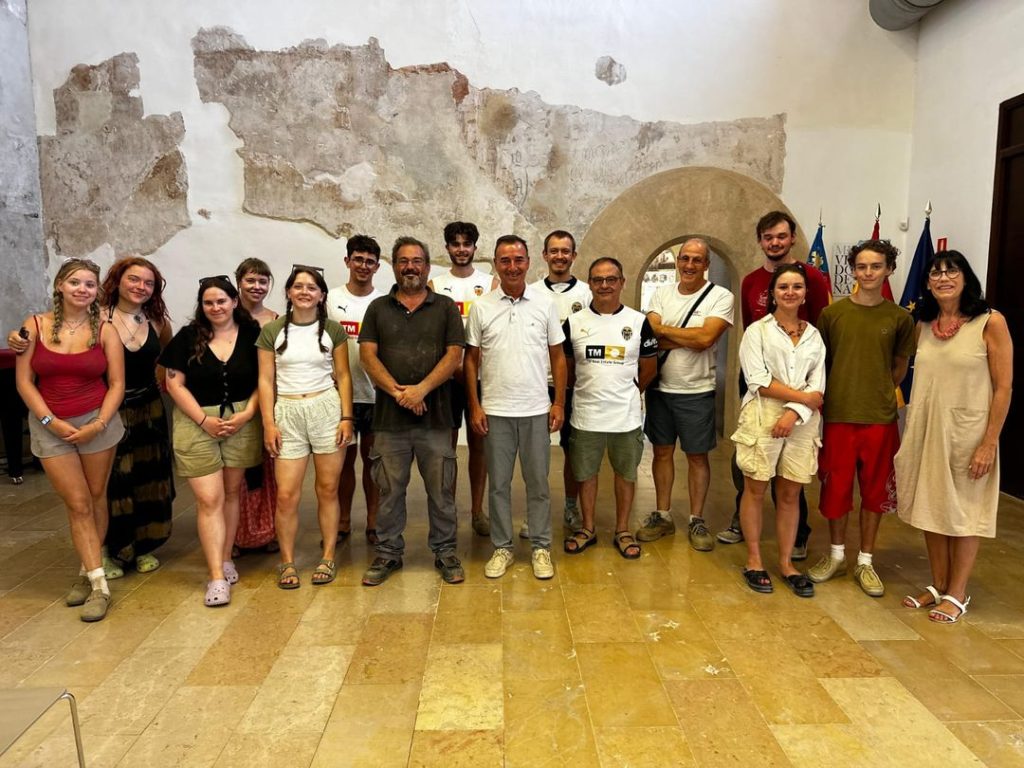
During one of the visits to places of interest in the area, Mayor Robert Raga welcomed the students of the archaeology course from Newcastle University to the Castle of Riba-roja, also accompanied by Josep Maria Macias (ICAC-CERCA), one of the promoters of the archaeological project at Valencia “la Vella”.
Continuity of the excavation works
These excavation works followed the archaeological campaign led by ICAC-CERCA at the site of Valencia “la Vella” this summer of 2024, which, since mid-June, has extended for nearly seven weeks and included a preliminary excavation and cleaning campaign (thanks to a grant from the Culture Area of the Provincial Council of Valencia), archaeological work within the framework of the ICAC-CERCA research project, the seventh edition of the Christian and Visigothic Archaeology Course, or the ninth edition of the Conference Series, among other activities; in addition to the mentioned archaeology course from Newcastle University.
After a short break, activities will resume in October, with the probable participation of the Friedrich-Alexander-Universität Erlangen–Nürnberg from Germany.
About the Catalan Institute of Classical Archaeology (ICAC-CERCA)
The Catalan Institute of Classical Archaeology (ICAC-CERCA) is a CERCA center established as a consortium in 2003 by the Government of Catalonia and the Rovira i Virgili University. It is a Catalan institution with an international scope, at the forefront of research and conservation of archaeological heritage. Its headquarters are in Tarragona, a city recognized as a UNESCO World Heritage Site in 2000. Its researchers work to understand the past through the study of archaeological remains and promote the preservation of the historical legacy. We are CERCA!
For more information, visit www.icac.cat.
Excavations at Valencia “la Vella” suggest a possible Muslim reoccupation in the 8th century
The latest findings at the Visigothic settlement reveal new buildings and evidence of a Muslim occupation.
This summer’s ninth archaeological campaign, conducted by MIRMED researchers from ICAC-CERCA and students from the seventh Course on Christian and Visigothic Archaeology at Valencia “la Vella” in Riba-roja de Túria (Valencia), has unveiled new insights into the urban nature of this significant Mediterranean site.
The findings indicate that the city’s occupation extends beyond the Visigothic period, suggesting Muslims may have settled it in the 8th century.
Under the coordination of Albert Ribera and the archaeological direction of Òscar Caldés and Josep Maria Macias, ICAC-CERCA researchers have mechanically lowered contemporary agricultural levels and prepared excavation areas for the next four years.
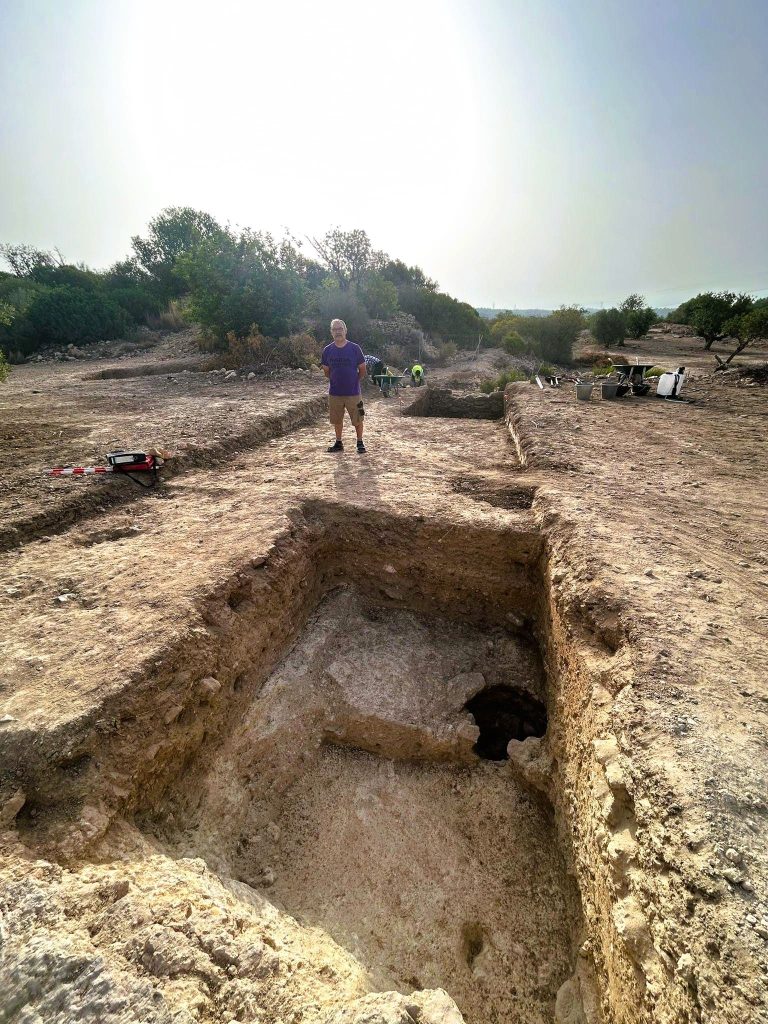
Architectural Discoveries and Site Functionality
Intervention took place on the city’s intermediate platform, adjacent to the outer and inner walls, which separate it from the lower district. This work will enable future expansion of the museographic area and help determine the sector’s functional character, providing content for the site’s historical narrative.
New evidence indicates that the city’s initial construction was meticulously planned.
Initially, the city served as a fortified center with imposing defensive walls and terraced urbanization adapted to the mountain’s natural slope. Over time, it evolved into a settlement with more everyday functionality.
The team identified the eastern and southern boundary walls of a large building over 28 meters long, studied the foundation system of the outer wall in this sector, and mapped the interior circulation channels between the city’s districts. These channels, evidenced by a staircase in 2023 and now by a ramp, were later blocked, possibly during the early Islamic period.
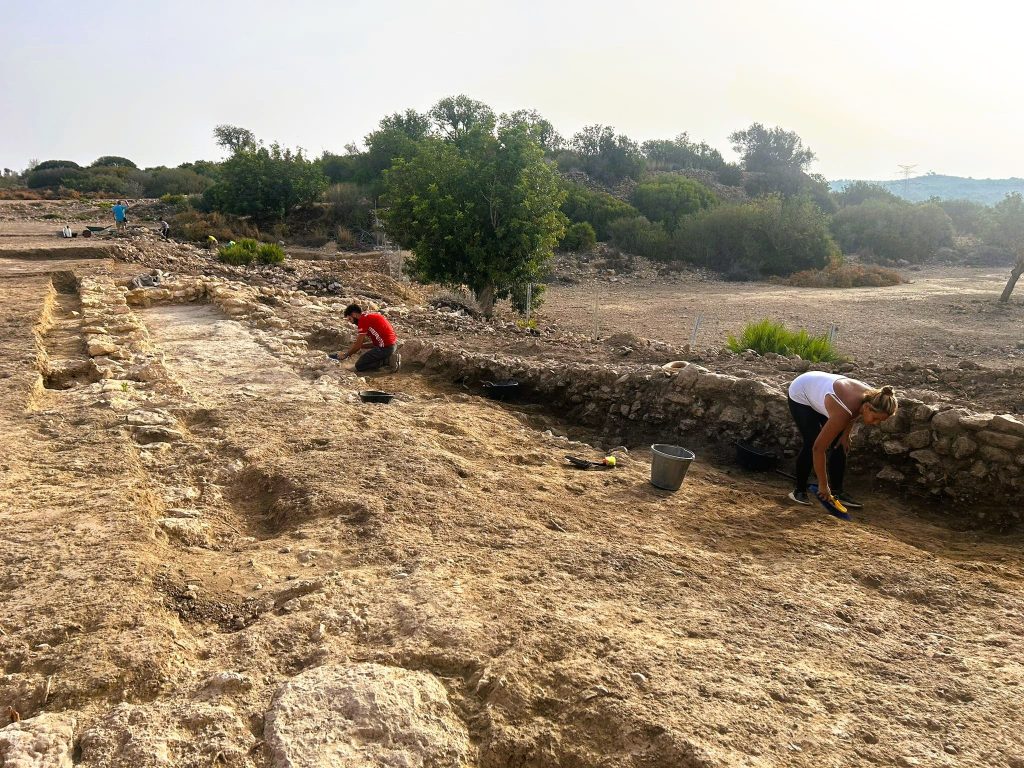
Recovered Materials
Another line of research focuses on identifying a possible residential space with a large fireplace, around which numerous burnt food remains from the cooking process have been documented. There is also a high concentration of snails, indicating significant consumption of this animal. This supports the idea that during the 7th century, the city lost its original military function, and the spaces adjacent to the wall were progressively occupied.
In the material domain, numerous Visigothic pottery remains have been recovered, along with chronological evidence of consumption indicating residual occupation yet to be determined, during the early Andalusian period or in the 8th century.
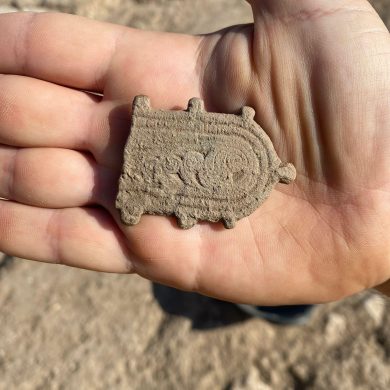
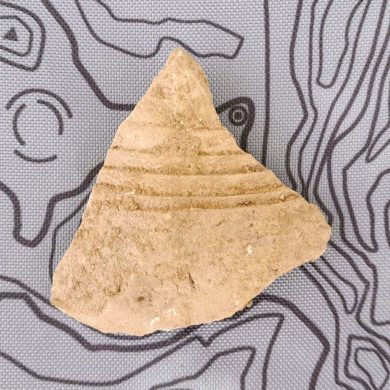
An Evolving City
Although the city seems to have been abandoned during the 8th century, other subsequent and sporadic Muslim occupations are not ruled out, albeit with a marked agricultural character.
Riba-roja de Túria’s mayor, Robert Raga, expressed satisfaction with the results of the new edition:
The archaeological excavations continue to weave the history of the various civilizations that have passed through our territory, allowing us to create a narrative that will enrich the future Archaeological Interpretation Center of Valencia ‘la Vella’, unique in Spain and one of the few historical testimonies from the Visigothic period.”
Specialized Advanced Training: An Added Value
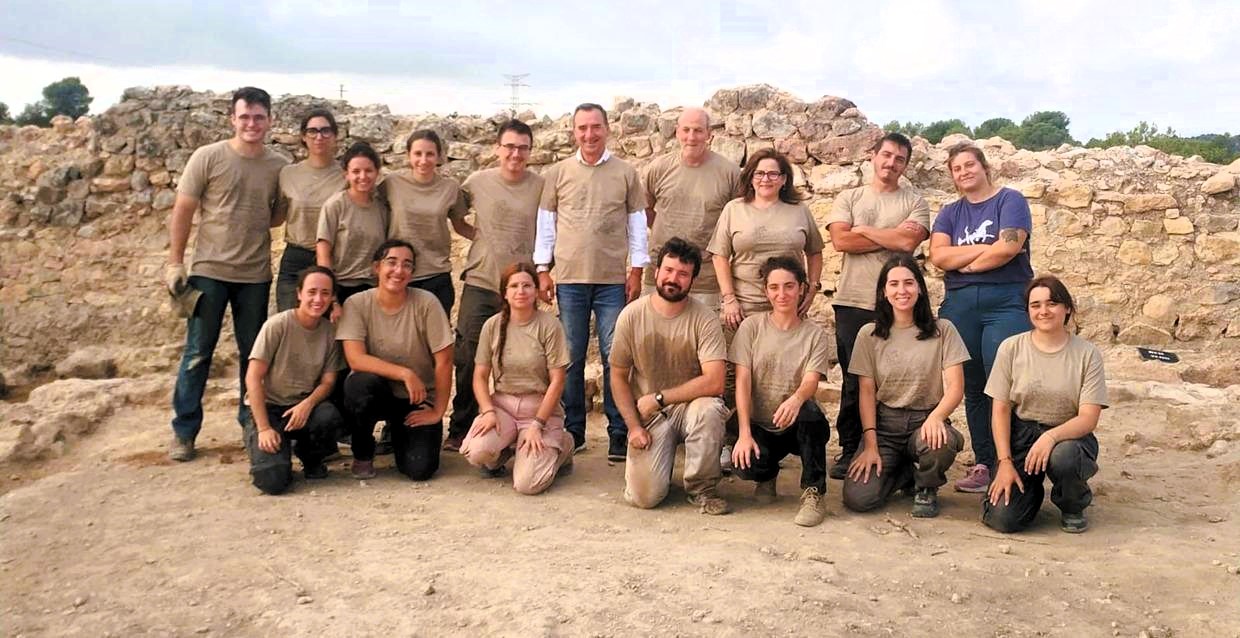
From July 1 to 19, the archaeological campaign hosted the VII Course on Christian and Visigothic Archaeology of Valencia “la Vella”, thanks to the framework agreement signed by the Riba-roja de Túria City Council and the Catalan Institute of Classical Archaeology in 2016.
Students from different European universities participated, having the opportunity to learn basic excavation and archaeological analysis methodology firsthand, as well as receiving specific training oriented towards Late Antiquity archaeology, its material culture, and its historical issues.
The course alternated excavation of the site with tasks such as washing, cataloging, and labeling the found remains, visiting Late Antiquity sites in the area, and attending lectures on aspects of the Visigothic and Christian worlds.
Additionally, the public could see the excavation results during an open house held on July 17, which fifty people attended.
Meanwhile, a preliminary excavation and cleaning campaign took place in the second half of June, thanks to a grant from the Culture Department of the Valencia Provincial Council.
Excavation Works keep ongoing
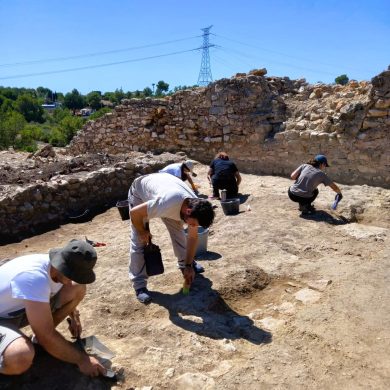
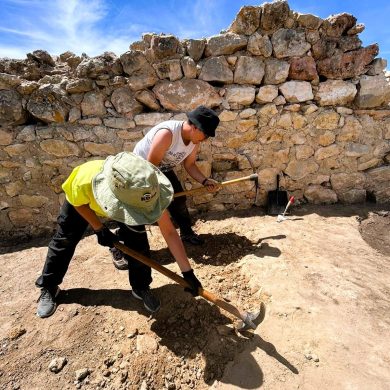
Excavations will continue until early August, in collaboration with Newcastle University (England) and Friedrich-Alexander-Universität Erlangen–Nürnberg (Germany), involving a group of 10 students from England along with Drs. David Govantes-Edwards and Chloë Duckworth, experts in glass furnaces.
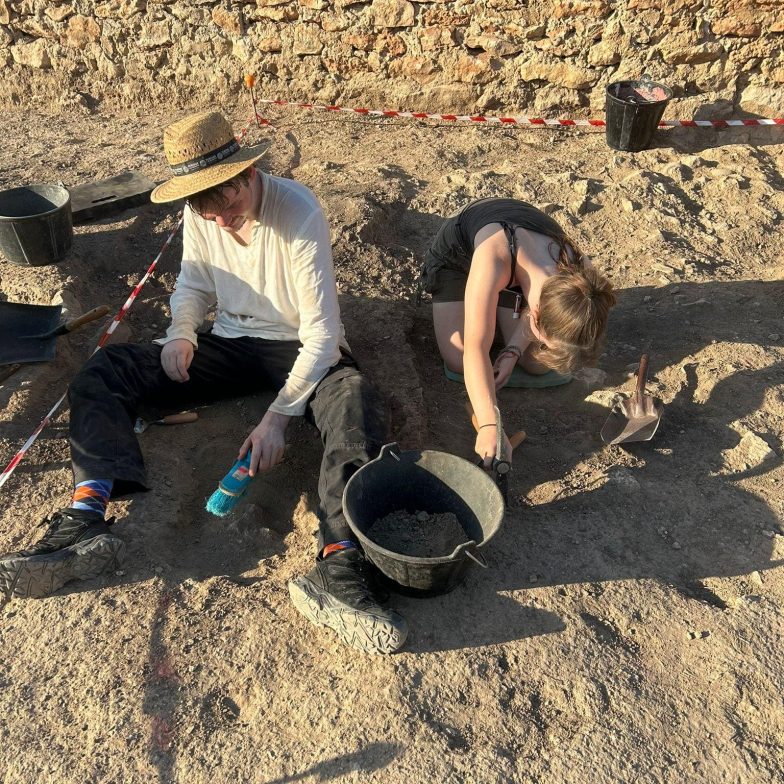
This two-week campaign aims to excavate the glass furnaces located recently at the Late Antiquity site of Valencia ‘la Vella’. The work began with the oven in sector 1000, found in the 2018 campaign, and the furnace in sector 6200, found in the 2020 campaign.
After a brief pause, activities will resume in October, likely with the participation of the mentioned German university.
About the Catalan Institute of Classical Archaeology (ICAC-CERCA)
The Catalan Institute of Classical Archaeology (ICAC-CERCA) is a CERCA center established as a consortium in 2003 by the Government of Catalonia and the Rovira i Virgili University. It is a Catalan institution with an international scope, at the forefront of research and conservation of archaeological heritage. Its headquarters are in Tarragona, a city recognized as a UNESCO World Heritage Site in 2000. Its researchers work to understand the past through the study of archaeological remains and promote the preservation of the historical legacy. We are CERCA!
For more information, visit www.icac.cat.
Jornada de portes obertes a València “la Vella”
Jornades de Portes Obertes València la Vella
L’objectiu d’aquestes jornades de portes obertes és donar a conèixer aquest magnífic jaciment i visitar les últimes intervencions que s’han realitzat durant el VII Curs d’Arqueologia Cristiana i Visigoda, coordinat per l’equip d’Antiguitat Tardana del grup de recerca MIRMED de l’ICAC-CERCA.
De la mà dels investigadors i investigadores que han treballat en la campanya, s’explicarà quins són els projectes futurs que marcaran les directrius científiques i museogràfiques per a la posada en valor del jaciment.
La visita comença en el futur centre d’interpretació. Després ens dirigirem al jaciment on visitarem algunes de les estructures descobertes en les últimes excavacions arqueològiques.
Data: 17 de juliol
Hora: 18.30 h
Punt de trobada: Estació de metro de València la Vella
📝Què has de fer per a inscriure’t? Emplena el formulari en línia que trobaràs en aquest enllaç.
Segueix el dia a dia de les excavacions al jaciment a Instagram de València «la Vella»!

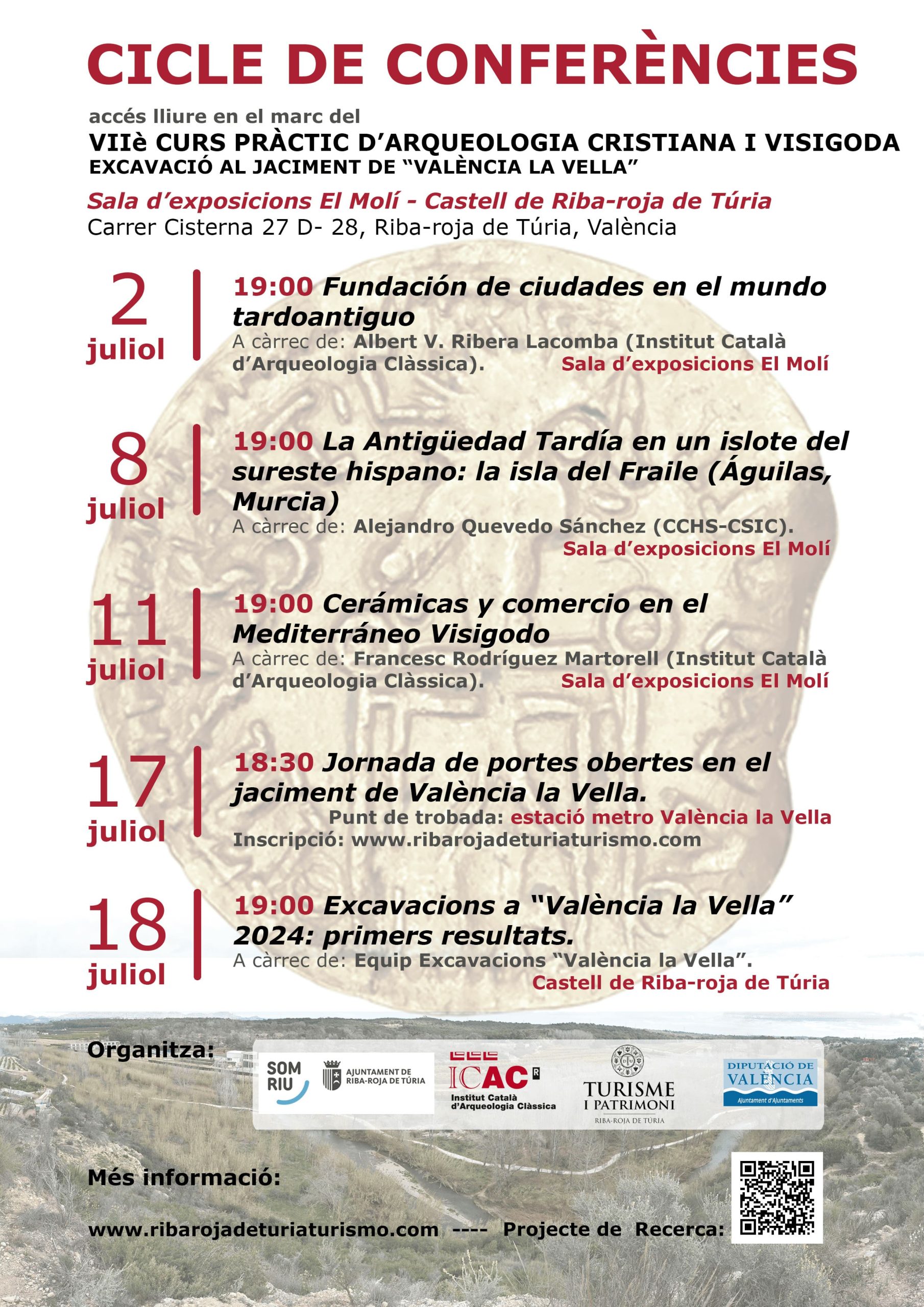
Cicle de conferències del VII Curs d’Arqueologia a València “la Vella”
El mes de juliol celebrem una nova edició del cicle de conferències, en el marc del VII Curs d’Arqueologia Cristiana i Visigoda de València «la Vella», que enguany celebra la seva setena edició, de l’1 al 19 de juliol.
Les conferències es celebraran, presencialment, a la Sala d’exposicions El Molí de Riba-roja de Túria, amb la participació de més d’una desena d’experts i investigadors en el món tardoantic.
Accés lliure! Consulta aquí el programa:
The archaeological campaign of València la Vella welcomes the VII edition of the Christian and Visigothic Archaeology course
The archaeological campaign in Valencia “la Vella” peaks with the VII Practical Course on Christian and Visigothic Archaeology and a new edition of the Conference Cycle.
On June 28, the first part of the excavations at the Valencia “la Vella” site was completed. It took place from June 17 to 28 with the participation of the company Global Mediterranea, to whom we are grateful for their involvement once again in this exceptional site.
This is the ninth archaeological campaign we have carried out at the Valencia “la Vella” site, with the support of the Riba-roja de Túria City Council and the Department of Culture of the Diputación de Valencia.
The ninth archaeological campaign in València “la Vella” has included the participation of Newcastle University
In this phase, the Late Antiquity and Christian Archaeology team from the MIRMED research group focused on machine excavation of a large area near the wall, where last year some stairs were found due to the existing slope at that point. This has allowed the identification of several spaces near the wall, with promising prospects for future excavation. Additionally, the presence of several walls of tens of meters in length and possible circulation areas raises questions about the functionality of this zone: military, productive, or residential.
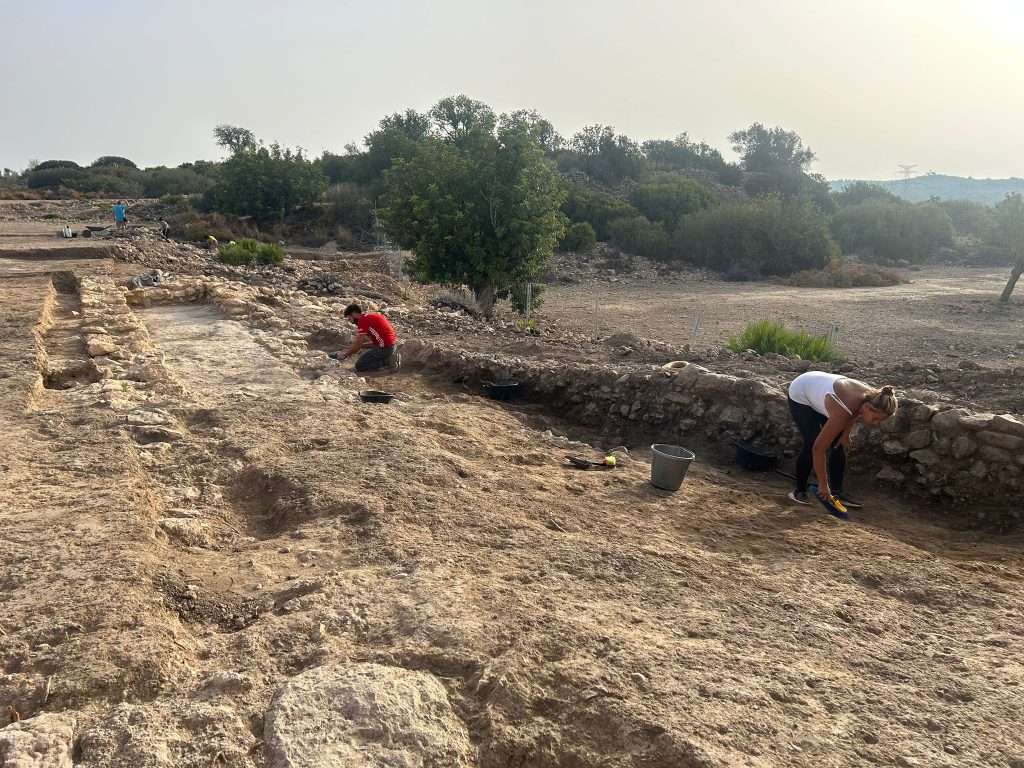
Very close by, another survey was initiated, where a longitudinal cut of a large part of the natural rock was made to level the area, resulting in well-defined terraces following the area’s topography.
In both zones, the team documented massive stone structures associated with archaeological levels containing paleo-Andalusian material (8th-9th centuries AD), which are of great interest for understanding what happened in Valencia “la Vella” after the fall of the Visigothic Kingdom.
In the last days of the campaign, efforts focused on conditioning the site with mechanical means, removing agricultural soil, and marking new surveys.
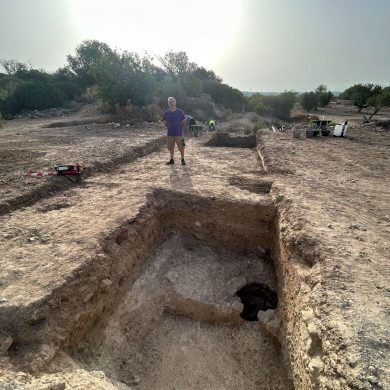
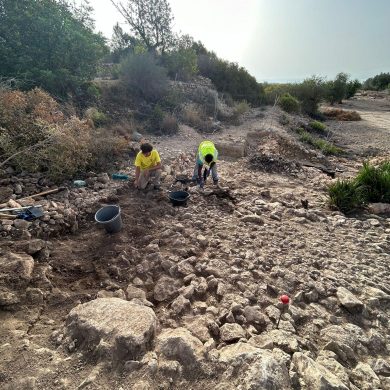
The team has focused the excavation on a sector that provided very good results last year: sector 6100, very close to the 6th-century AD wall, where walls and a staircase began to be documented last year.
One of the objectives of these two weeks of the campaign has been to better understand the stratigraphic relationships of this area with the wall, as well as the functionality of the structures.
From July 1 to 19, València “la Vella” will host the VII edition of the Christian and Visigothic Archaeology Course (Riba-roja de Túria, Valencia). Twelve students will participate, three of whom are from the University of Valencia.
The València “la Vella” archaeology course is aimed at undergraduate or master’s students of history, archaeology, or related studies. During the course, excavation tasks, material classification, workshops, lectures, and visits to Late Antique sites in the area will be alternated.
These days will also see a new edition of the Conference Cycle organized by ICAC-CERCA and the Riba-roja de Túria City Council as part of the VII Course on Christian and Visigothic Archaeology of València “la Vella”. From July 2 to 18, the cycle will feature very interesting talks on various topics, given by experts in the Late Antique topic.
The conferences are open to a general audience and will be held in the El Molí Exhibition Hall (Riba-roja de Túria Castle) in Riba-roja de Túria. Free admission! You can check the schedule on this poster and in the ICAC-CERCA agenda.
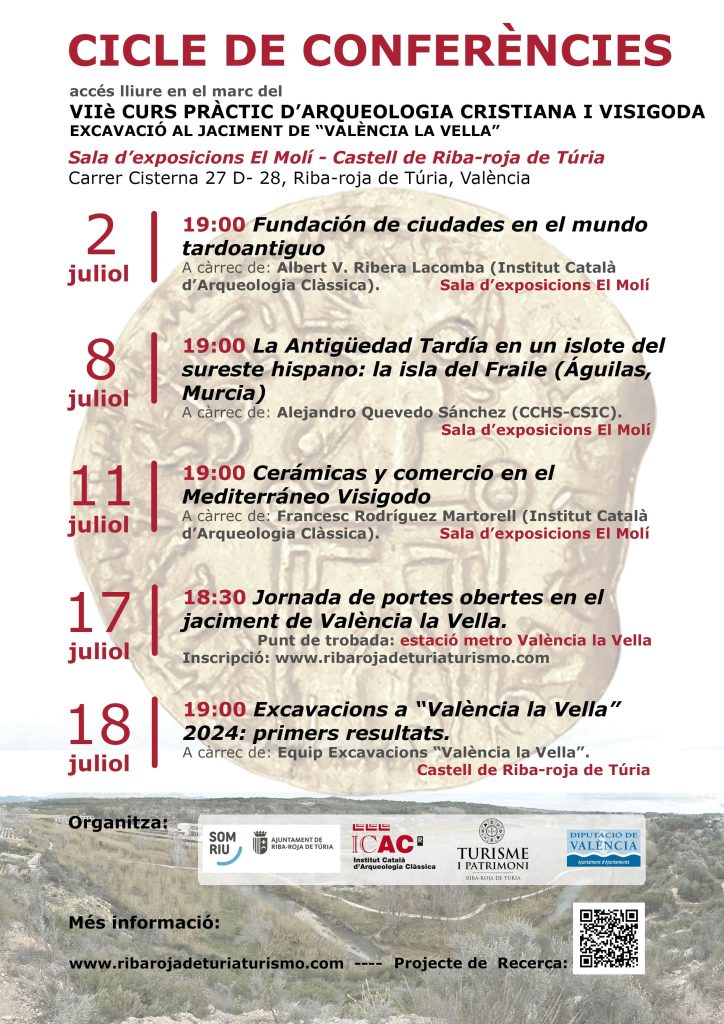
Finally, the archaeological campaign and the activities related to the Christian and Visigothic Archaeology Course in València “la Vella” have encouraged us to organize a new open day at the site on July 17th. If you want to attend, please register on the Riba-roja de Túria Tourism website. We look forward to seeing you there!
Follow the archaeological campaign’s activity on the social media of València “la Vella”!
View this post on Instagram
About the Catalan Institute of Classical Archaeology (ICAC-CERCA)
The Catalan Institute of Classical Archaeology (ICAC-CERCA) is a CERCA center established as a consortium in 2003 by the Government of Catalonia and the Rovira i Virgili University. It is a Catalan institution with an international scope, at the forefront of research and conservation of archaeological heritage. Its headquarters are in Tarragona, a city recognized as a UNESCO World Heritage Site in 2000. Its researchers work to understand the past through the study of archaeological remains and promote the preservation of the historical legacy. We are CERCA!
For more information, visit www.icac.cat.
7th Training Course on Christian & Visigothic Archaeology at Valencia “la Vella”: open enrollment!
Open enrollment for the 7th Training Course on Christian and Visigoth Archaeology, run by the ICAC and the Riba-roja de Turia City Council!
The 7th Training Course on Christian and Visigoth Archaeology, which will take place from July 1 to 19, is a unique opportunity to learn about the basic methodology of archaeological excavation and analysis, but also to work on a very special site, such as that of Valencia “la Vella”.
The training program combines daily fieldwork at the site with tasks of analysis of the results, as well as various parallel activities (theoretical sessions and visits to sites in the surrounding area). The course offers training content specifically oriented toward Late Antique archaeology, its material culture, and its historical problems.
From July 1 to 19, the training course will alternate the excavation of the archaeological site of Valencia “la Vella” with hands-on tasks of washing and cataloging archaeological remains found, visits to other Late Ancient sites in the surrounding area, and some scientific talks on topics related to the Visigothic and Christian world.
Check out the provisional PROGRAMME
Practical information:
- Openings: 12 Archaeology students (undergraduate or postgraduate). There are three vacancies reserved for students of the University of Valencia (UV).
- Deadline for registrations: May 19th, 2024
- Registration fee: 100 € (including insurance, full accommodation, and meals on working days).
- Material: each student has to wear safety boots, gloves, sun protection measures, anti-mosquitoes, and bedding (including cleaning).
- This is an outdoor activity during July, in an environment with high humidity.
Deadline for applications: May 19, 2024
Download the leaflet in pdf to access the registration form
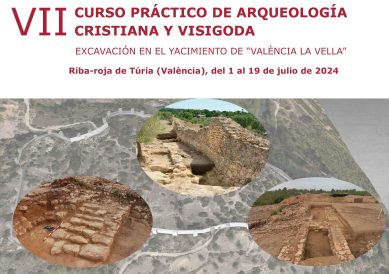

The archaeological site of Valencia «la Vella»:
Valencia “la Vella” is an archaeological site from the Visigothic period in the municipality of Riba-roja de Turia, located about 16 km from the city of Valencia. It is a walled enclave located on top of a hill in a spectacular location overlooking the River Turia, about 2 km from the Pla de Nadal palace and within the Turia River Natural Park.
Since 2016, the City Council of Riba-roja de Turia (Valencia) promotes an archaeological research and heritage conservation and dissemination project developed by the Catalan Institute of Classical Archaeology (under the direction of ICAC researcher Josep Maria Macias), with the support of the Valencia Provincial Council and the Generalitat Valenciana.
Valencia «la Vella» is an ex novo foundation that stands out for its walls that surround a river hill 20/40 m high and that are reinforced by numerous towers.
The settlement has been known since the 14th century and, partly due to its name, had been associated with the pre-Roman and Roman settlement Pallantia. Archaeological excavations in the seventies of the last century, motivated by partial destruction of the site, showed a Late Antiquity chronology.
Valencia “la Vella” was once again removed from all scientific interests for decades. Currently, it is still an unknown and nameless city. It is an archaeological site yet to be discovered, although archaeological excavations firmly confirm its value and cultural potential, and historical relevance. It is a Visigothic city built “suddenly” 16 km from Valentia, during the second half of the 6th century and dominating the Turia river waterway.
In 2016 the ICAC posted online in open access a 3D models collection of the Valencia “la Vella” site on the Sketchfab platform:
Within the framework of the research project coordinated by the ICAC, seven archaeological campaigns have been carried out at the site. The first four were integrated into the Christian and Visigothic Archeology courses, where over twenty students and graduates from around the world participated. The 2020 and 2021 campaigns followed a different dynamic due to the pandemic situation.